


Plate Heat Exchanger
Hengshui Chiyue Technology Co., LTD., located in Jingxian, Hengshui City, Hebei Province, is a high-tech enterprise focusing on the research and development and production of plate heat exchanger gaskets. The park where the company is located has been rated as "Hebei Rubber and Plastic Industry Private Science and Technology Park", with perfect industrial supporting facilities and convenient logistics network. After more than 20 years of development, the company has become a well-known rubber gasket supplier at home and abroad, the products are exported to Europe and the United States market, well received by customers. The company has strong technical strength, has a number of professionals engaged in gasket R & D and production, and passed ISO9001:2015 quality management system certification, established a perfect quality control system.
Why Choose Us
High Quality
We produce rubber gaskets, covering a variety of specifications and models, can meet the needs of most heat exchanger brands at home and abroad. The rubber material independently developed by the company has excellent temperature resistance and medium resistance, and the product has high pressure and good market performance.
Professional Team
The company has strong technical strength, has a number of professionals engaged in gasket R & D and production, and passed ISO9001:2015 quality management system certification, established a perfect quality control system.
Production Market
Products are exported to Europe and the United States and other international markets, the annual output of more than 1 million, has been widely recognized by customers around the world. With high-quality products and services, the company has established a good brand image in the international market, and its performance has grown steadily.
Our Service
Professional marketing team in-depth understanding of customer needs, to provide customized solutions.
Strictly monitor the production process to ensure product quality.
-
![Stainless Steel Plate Heat Exchanger]() Stainless Steel Plate Heat ExchangerProducts Description Product Overview Stainless steel plate heat exchangers are high-efficiency heat transfer equipment assembled with stainless steel heat transfer plates, sealing gaskets, fixed...read more
Stainless Steel Plate Heat ExchangerProducts Description Product Overview Stainless steel plate heat exchangers are high-efficiency heat transfer equipment assembled with stainless steel heat transfer plates, sealing gaskets, fixed...read more -
![High-Quality Titanium Plate Heat Exchange]() High-Quality Titanium Plate Heat ExchangeHigh-Quality Titanium Plate Heat Exchange features superior corrosion resistance. It can handle seawater and various corrosive chemical media to prevent rust, perforation and liquid leakage of...read more
High-Quality Titanium Plate Heat ExchangeHigh-Quality Titanium Plate Heat Exchange features superior corrosion resistance. It can handle seawater and various corrosive chemical media to prevent rust, perforation and liquid leakage of...read more -
![Compact Plate Heat Exchanger]() Compact Plate Heat ExchangerCompact Plate Heat Exchanger adopts an overall compact and lightweight structure with a small footprint, allowing easy installation even in narrow machine rooms. Internal corrugated plates agitate...read more
Compact Plate Heat ExchangerCompact Plate Heat Exchanger adopts an overall compact and lightweight structure with a small footprint, allowing easy installation even in narrow machine rooms. Internal corrugated plates agitate...read more -
![Flat Plate Heat Exchanger]() Flat Plate Heat ExchangerFlat Plate Heat Exchanger is a high-efficiency and energy-saving heat exchange device. It is assembled by stacking multiple metal heat exchange plates, and heat transfer between cold and hot...read more
Flat Plate Heat ExchangerFlat Plate Heat Exchanger is a high-efficiency and energy-saving heat exchange device. It is assembled by stacking multiple metal heat exchange plates, and heat transfer between cold and hot...read more -
![Semi Welded Plate Heat Exchanger]() Semi Welded Plate Heat ExchangerThe semi-welded plate heat exchanger is a hybrid plate heat exchange device. Two corrugated plates are paired together, with their edges laser-welded to form sealed flow channels for the passage...read more
Semi Welded Plate Heat ExchangerThe semi-welded plate heat exchanger is a hybrid plate heat exchange device. Two corrugated plates are paired together, with their edges laser-welded to form sealed flow channels for the passage...read more -
![High-Efficiency Plate Bar Heat Exchanger]() High-Efficiency Plate Bar Heat ExchangerThe High-Efficiency Plate Bar Heat Exchanger adopts high thermal conductivity plates and achieves rapid heat exchange between cold and hot fluids through an efficient turbulent flow design. It is...read more
High-Efficiency Plate Bar Heat ExchangerThe High-Efficiency Plate Bar Heat Exchanger adopts high thermal conductivity plates and achieves rapid heat exchange between cold and hot fluids through an efficient turbulent flow design. It is...read more -
![Wide Gap Plate Heat Exchanger]() Wide Gap Plate Heat ExchangerThe Wide Gap Plate Heat Exchanger is an efficient and compact heat exchange equipment designed for handling high viscosity, particulate or easy-to-scale fluids.read more
Wide Gap Plate Heat ExchangerThe Wide Gap Plate Heat Exchanger is an efficient and compact heat exchange equipment designed for handling high viscosity, particulate or easy-to-scale fluids.read more -
![Free Flow Plate Heat Exchangers]() Free Flow Plate Heat ExchangersA Free Flow Plate Heat Exchanger is a highly efficient heat exchanger that is usually composed of many parallel metal plates that are connected by certain seals. The fluid inside the heat...read more
Free Flow Plate Heat ExchangersA Free Flow Plate Heat Exchanger is a highly efficient heat exchanger that is usually composed of many parallel metal plates that are connected by certain seals. The fluid inside the heat...read more -
![Plate And Frame Heat Exchanger]() Plate And Frame Heat ExchangerPlate And Frame Heat Exchanger is a widely used heat exchange equipment. Its core structure includes a series of parallel metal plates and sealing gaskets, which are firmly mounted in a fixed frame.read more
Plate And Frame Heat ExchangerPlate And Frame Heat Exchanger is a widely used heat exchange equipment. Its core structure includes a series of parallel metal plates and sealing gaskets, which are firmly mounted in a fixed frame.read more -
![Seawater Heat Exchanger]() Seawater Heat ExchangerThe Seawater Heat Exchanger developed by our company uses high-performance anti-corrosion materials, which are specially selected to cope with the harsh marine environment.read more
Seawater Heat ExchangerThe Seawater Heat Exchanger developed by our company uses high-performance anti-corrosion materials, which are specially selected to cope with the harsh marine environment.read more -
![Gasketed Plate Heat Exchanger]() Gasketed Plate Heat ExchangerOur Gasketed Plate Heat Exchanger is the product of the deep integration of the company's technological innovation and customer needs, aiming to provide customers with more efficient, safer and...read more
Gasketed Plate Heat ExchangerOur Gasketed Plate Heat Exchanger is the product of the deep integration of the company's technological innovation and customer needs, aiming to provide customers with more efficient, safer and...read more -
![Acid Resistant Heat Exchangers]() Acid Resistant Heat ExchangersAcid Resistant Heat Exchangers play an irreplaceable role in many industrial fields with their excellent corrosion resistance and efficient heat transfer ability. With the advancement of science...read more
Acid Resistant Heat ExchangersAcid Resistant Heat Exchangers play an irreplaceable role in many industrial fields with their excellent corrosion resistance and efficient heat transfer ability. With the advancement of science...read more


A plate heat exchanger is a type of heat exchanger that uses a series of metal plates to move heat from one fluid to another. These plates are positioned over each other to create a channel series so that fluid can move between them.
The main benefit of plate heat exchangers over conventional heat exchangers is that the fluid is distributed over the plate due to that fluid is exposed to a larger surface area. This increases the heat transfer rate and significantly speeds up the rate of temperature change.
Small plate heat exchangers have a big influence on household heating and hot water. The large business models utilize gaskets between the plates, while the smaller models tend to weld.
Benefits of Plate Heat Exchanger
Compact Design and Space Efficiency
One of the primary advantages of plate heat exchangers is their compact design. Unlike the bulkier shell and tube counterparts, PHEs utilize a series of thin, corrugated plates stacked together. This design significantly reduces the footprint of the heat exchanger, making it an ideal choice when space is limited. The compactness also translates to lower material costs and easier installation.
Enhanced Heat Transfer Efficiency
Plate heat exchangers boast a high heat transfer coefficient due to the corrugated surface of the plates. This design creates turbulence in the fluid flow, maximizing heat exchange efficiency. As a result, PHEs can achieve the same level of heat transfer in a smaller footprint compared to shell and tube heat exchangers. The efficient heat transfer capabilities of PHEs contribute to energy savings and overall system performance.
Flexible Configurations and Easy Maintenance
Plate heat exchangers offer greater flexibility in terms of configuration. The modular design allows for easy addition or removal of plates to accommodate changing process requirements. This flexibility makes PHEs suitable for a wide range of applications, from HVAC systems to industrial processes. Additionally, the removable plate arrangement facilitates simple maintenance and cleaning, reducing downtime and operational costs.
Faster Heat Transfer Rates
Plate heat exchangers exhibit faster heat transfer rates compared to shell and tube alternatives. The turbulent flow created by the corrugated plates enhances heat transfer efficiency, allowing for rapid temperature adjustments. This characteristic is particularly beneficial in processes where quick response times are essential, such as in the food and pharmaceutical industries.
Type of Plate Heat Exchanger

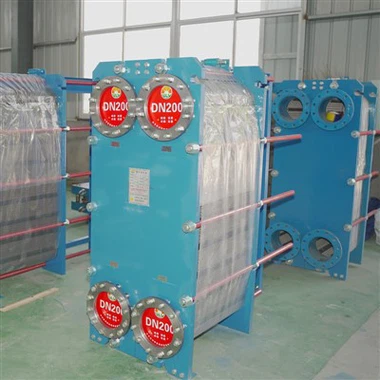
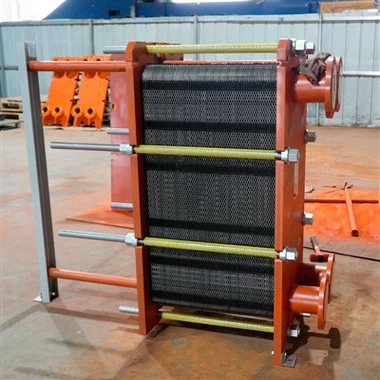

Gasketed Plate Heat Exchangers
Are the most common type of PHE. They’re made up of a series of plates, each with a gasket bolted together. The gaskets prevent the two fluids from coming into direct contact with each other but allow them to flow past each other to transfer heat. The plates are usually made of stainless steel but can also be made of other materials, such as titanium or nickel alloys. Gasketed PHEs can be used with various fluids, including water, steam, oil, and chemicals. Gasketed plate heat exchangers are relatively easy to maintain and clean, making them ideal for food and beverage processing facilities.
Brazed Plate Heat Exchangers
Are similar to gasketed plate heat exchangers, but the plates are joined together with a brazing material instead of gaskets. It makes them more resistant to high temperatures and pressures. These are often used in power plants and other heavy industrial applications. Brazing is a process in which two metals are joined together using a third metal with a lower melting point than the other two. BPHEs can be made from various metals, including copper, stainless steel, and nickel alloys. They’re often used in applications with the potential for corrosion or leaks.
Welded Plate Heat Exchangers (WPHEs)
Are made of a series of welded plates. They can be made from various metals, including stainless steel, carbon steel, and nickel alloys. WPHEs are often used in applications with high pressure or temperature potential. Welded plate heat exchangers are made by welding the plates together at the edges. It creates a stronger joint that can withstand higher temperatures and pressures than either gasketed or brazed plate heat exchangers. Welded plate heat exchangers are commonly used in petrochemical plants and other industrial facilities where they will be exposed to harsh chemicals and corrosive materials. Plate heat exchangers are essential to many industrial processes, from food and beverage processing to chemical manufacturing.
What are the Materials of the Plate Heat Exchanger Plates?
Stainless steel 304, 316, 316L, etc.: stainless steel plates have good corrosion resistance and high cost performance. They are suitable for heat exchange media with low chloride ion content such as purified water, river water, edible oil and mineral oil. Plate heat exchanger plates are made of stainless steel.
Titanium plate: The plate heat exchanger uses unalloyed titanium, which is lighter in weight and good in quality. It can naturally generate a passivation protective film, which will repair itself when damaged, so the corrosion resistance is better than stainless steel. The price of this material is relatively high, and it is suitable for heat exchange media containing high chloride ions such as sea water, salt water, and salinity.
Titanium-palladium alloy: The plate heat exchanger uses unalloyed titanium added with palladium (0.12%~0.25%), which improves the corrosion resistance of titanium in acid liquids, and is suitable for hydrochloric acid, nitric acid, sulfuric acid, etc. Medium, used in some specific working conditions.
Smo254: A kind of austenitic stainless steel, due to its high molybdenum content, has extremely high resistance to chloride pitting and crevice corrosion, suitable for type 316 dilute sulfuric acid, sparse salt aqueous solution, and inorganic aqueous solution And other media. It is a kind of cost-effective stainless steel, which is widely used in the fields of chemical industry, desulfurization and environmental protection.
Industrial Applications Of Plate Heat Exchangers
Hvac (Heating, Ventilation, and Air Conditioning)
Plate heat exchangers are used in HVAC systems to recover heat from the exhaust air and preheat incoming fresh air, improving energy efficiency and reducing heating costs.
Food and Beverage Industry
In the food and beverage industry, plate heat exchangers are used for pasteurization, sterilization, and cooling of products like milk, juices, and sauces.
They are also employed for heating or cooling water for various food processing applications.
Chemical Processing
Plate heat exchangers are used for temperature control, condensation, and evaporation processes in chemical manufacturing.
They are often used in applications involving corrosive or aggressive fluids due to their easy maintenance and material options.
Petrochemical Industry
Plate heat exchangers play a critical role in refining processes by cooling or heating fluids such as crude oil, hydrocarbons, and various chemicals.
Power Generation
Plate heat exchangers are used in power plants for cooling and condensing steam to improve the efficiency of power generation processes, such as in the condenser.
Pharmaceutical Industry
They are used for precise temperature control and pasteurization of pharmaceutical products and for providing clean and sterile conditions in pharmaceutical processes.
How Plate Heat Exchangers Work
They’re often referred to as PHE’s, PHX’s, or sometimes just HX or HEX. Plate heat exchangers are very common. They are used extensively in building services and manufacturing. The reason they are popular is because they are very compact, they’re very efficient, they’re easy to service and need little maintenance.
The purpose of a plate heat exchanger is to transfer thermal energy between two fluids, without the fluids mixing together. For example, in building services, you might want to transfer heat from a primary loop connected to a boiler over to a separate secondary loop, maybe in a district heating network. In manufacturing, you may want to cool down some oil using water, but obviously you don’t want to mix the oil and the water together.
Looking at the main parts of the plate heat exchanger. We have the end plates on the front and back cover, and which are usually made from mild steel. They’re very strong, they’re there to hold everything together. Then we have the nuts, these attach and tighten onto the tightening bolts. The tightening bolts fit in some grooves on the side of the unit and they’ll run the entire length of the heat exchanger. The bolts tighten onto these bars and compress all of the plates and gaskets together forming a water tight seal. Wedged between the end plates are the gaskets and heat transfer plates.
Components of Plate Heat Exchanger
Plates
A single-plate heat exchanger can contain a maximum of 700 plates. As the plate pack compresses, the holes in the plate’s corners create a constant tunnel or manifold that allows fluid to flow through the plate pack and exit the device.
The space between the thin plates of the heat exchanger makes a tight channel that alternately traverses by cold and hot fluids and offers very small resistance to heat transfer.
Carrying Beam
The upper part installs between the supporting column and the fixed plate on which the pressure plates and the exchanger plates are connected.
Fixed Plate
The fixed plate is a fundamental part of the plate heat exchanger. As the name of this plate represents that it is a fixed frame plate. Generally, the heat exchanger pipes connect with the fixed plates.
Support Column
This is a non-moveable part of the PHE. The guiding bar and carrying beam are attached to this part.
Pressure Plate
The PHE has a mobile pressure plate frame attached to the exchanger carrying beam. This frame compresses the plates of the exchanger.
Guiding Bar
This part guides the pressure plate and heat exchanger plates downward.
Tightening Unit
It is used to compress the frame components of the plate pack. It has tightening washers, tightening nuts, and tightening bolts.
PHE Plates and Gasket
The packing of plates is installed between the pressure plate and the fixed frame plate. This plate pack compresses by tightening the screws fastened between the two plates. The gaskets cover the plates to regulate the flow.
How to Maintenance Plate heat exchanger
Regular Inspection
Conduct routine inspections of the plate heat exchanger to check for signs of corrosion, fouling, or damage to the plates. This can help identify potential problems early and prevent costly repairs or downtime.
Cleaning
Fouling, scaling, or deposits on the plates can significantly reduce heat transfer efficiency. Regular cleaning using appropriate methods and cleaning agents is necessary to maintain optimal performance. Common cleaning methods include chemical cleaning, mechanical cleaning, and high-pressure water cleaning.
Gasket Replacement
The gaskets used to seal the plates may degrade over time due to exposure to heat, chemicals, or mechanical stress. Inspect gaskets regularly and replace them as needed to prevent leaks and ensure proper sealing.
Pressure Testing
Periodically perform pressure tests to check for leaks or weaknesses in the plate pack. This helps ensure the integrity of the heat exchanger and prevents potential safety hazards.
Fluid Analysis
Analyze the properties of the fluids circulating through the heat exchanger, such as pH, hardness, and corrosiveness, to determine their impact on the equipment and implement appropriate measures to mitigate any adverse effects.
Operating Conditions
Monitor and maintain proper operating conditions, including flow rates, temperatures, and pressure levels, to prevent issues such as cavitation, erosion, or thermal stress on the plates.
Our Factory
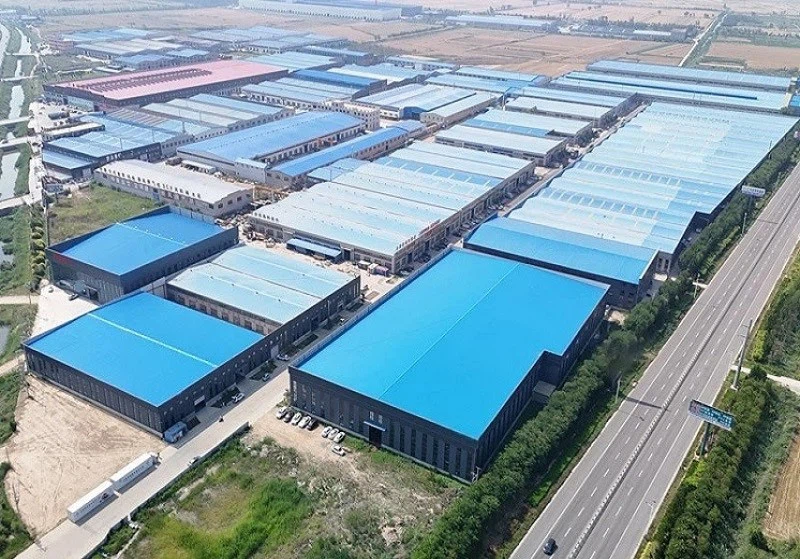
Our factory covers an extensive area and is equipped with advanced production equipment, including 14 flat vulcanizing machines, and the maximum heating plate size can be adapted to various production requirements. The company has more than 750 sets of molds of various models, which can meet the specifications of most heat exchanger brands in the market.

Our Certificate


FAQ
Q: What is a plate frame heat exchanger?
Q: How efficient are plate heat exchangers?
Q: How to test a plate heat exchanger?
Q: Do plate heat exchangers go bad?
Q: When to use a plate heat exchanger?
Q: Can a plate heat exchanger leak?
Q: What is the main advantage of plate heat exchangers?
Q: How much does it cost to replace a plate heat exchanger?
Q: What to use to clean a plate heat exchanger?
Q: How do you maintain a plate type heat exchanger?
Q: What is the maximum temperature for plate heat exchanger?
Q: Should you insulate a plate heat exchanger?
Q: How to unblock a plate heat exchanger?
Q: How do you detect a leak in a plate heat exchanger?
As one of the most professional plate heat exchanger manufacturers and suppliers in China, we're featured by quality products and good price. Please rest assured to buy cheap plate heat exchanger for sale here and get quotation from our factory. Contact us for customized service.
plate heat exchanger in waste management 4 0, plate heat exchanger in recycling, cost effective plate heat exchanger