

Plate type heat exchangers are widely used in various industrial applications due to their high efficiency, compact design, and ease of maintenance. As a leading supplier of plate type heat exchanger gaskets, we often receive inquiries about the potential use of these gaskets in automotive applications. In this blog post, we will explore the feasibility of using plate type heat exchanger gaskets in automotive systems, discussing the technical requirements, benefits, challenges, and considerations.
Technical Requirements in Automotive Applications
Automotive applications present a unique set of technical requirements for heat exchanger gaskets. The gaskets must be able to withstand a wide range of temperatures, pressures, and chemical environments. In an automotive engine, for example, the coolant system operates at elevated temperatures, typically ranging from 80°C to 120°C, and can experience pressures up to 200 kPa. Additionally, the gaskets may come into contact with various chemicals, such as coolant additives, lubricants, and fuels.
Our Plate Type Heat Exchanger Gasket Material is carefully selected to meet these demanding requirements. We offer a variety of materials, including EPDM (Ethylene Propylene Diene Monomer), NBR (Nitrile Butadiene Rubber), and FKM (Fluoroelastomer), each with its own unique properties. EPDM is known for its excellent resistance to heat, water, and steam, making it suitable for coolant systems. NBR offers good resistance to oils and fuels, while FKM provides exceptional resistance to high temperatures and chemicals, making it ideal for applications in the engine compartment.
Benefits of Using Plate Type Heat Exchanger Gaskets in Automotive Applications
1. High Efficiency
Plate type heat exchangers are known for their high heat transfer efficiency. The large surface area provided by the plates allows for efficient heat exchange between the coolant and the engine. Our gaskets are designed to ensure a tight seal between the plates, minimizing heat loss and maximizing the heat transfer rate. This can lead to improved engine performance and fuel efficiency.
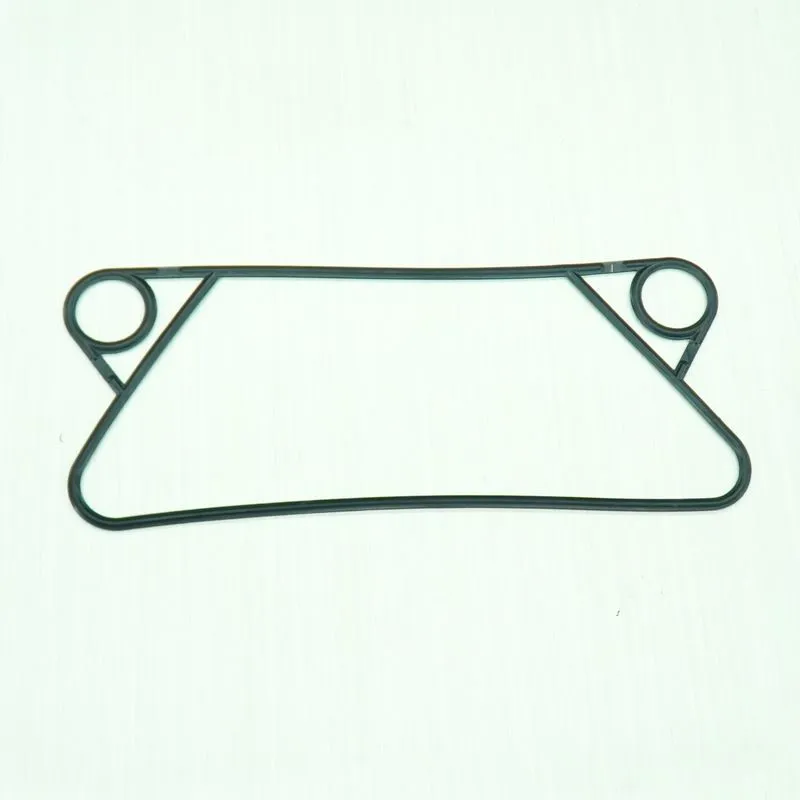

2. Compact Design
Automotive applications often have limited space. Plate type heat exchangers have a compact design, which makes them ideal for use in vehicles. The gaskets we supply are also designed to be thin and lightweight, further contributing to the overall compactness of the heat exchanger. This allows for more efficient use of space in the engine compartment.
3. Easy Maintenance
Plate type heat exchangers are relatively easy to maintain. The gaskets can be easily replaced if they become damaged or worn out. Our Heat Exchanger Sealing Gasket is designed for easy installation and removal, reducing downtime and maintenance costs.
Challenges and Considerations
1. Vibration and Shock Resistance
Automotive vehicles are subject to vibrations and shocks during operation. The gaskets must be able to withstand these dynamic forces without losing their sealing properties. We conduct extensive testing to ensure that our gaskets have excellent vibration and shock resistance. The material selection and design of the gaskets are optimized to provide long-term reliability in automotive applications.
2. Compatibility with Automotive Fluids
As mentioned earlier, the gaskets may come into contact with various automotive fluids. It is crucial to ensure that the gasket material is compatible with these fluids to prevent chemical degradation and leakage. Our technical team can provide guidance on the selection of the appropriate gasket material based on the specific automotive application and the fluids involved.
3. Cost
Cost is always a consideration in automotive manufacturing. While plate type heat exchangers offer many benefits, the cost of the gaskets can be a factor. However, our company is committed to providing high-quality gaskets at competitive prices. We continuously invest in research and development to improve the manufacturing process and reduce costs without compromising on quality.
Real - World Examples and Case Studies
In recent years, there have been several successful applications of plate type heat exchangers in automotive systems. For example, some hybrid and electric vehicles use plate type heat exchangers in their battery cooling systems. The gaskets we supplied for these applications have proven to be reliable, providing a tight seal and excellent resistance to the coolant used in the battery system.
In another case, a leading automotive manufacturer used our Heat Exchanger Rubber Gasket in their engine oil cooler. The gasket's ability to withstand high temperatures and oil exposure has contributed to the long - term performance and reliability of the oil cooler, reducing maintenance requirements and improving the overall efficiency of the engine.
Conclusion
In conclusion, plate type heat exchanger gaskets can be used in automotive applications with proper consideration of the technical requirements, benefits, challenges, and cost. Our company, as a professional supplier of plate type heat exchanger gaskets, has the expertise and experience to provide high - quality gaskets that meet the demanding needs of the automotive industry.
If you are interested in exploring the use of our plate type heat exchanger gaskets in your automotive applications, we invite you to contact us for further discussion. Our team of experts will be happy to provide you with detailed information, technical support, and a customized solution tailored to your specific requirements.
References
- Incropera, F. P., DeWitt, D. P., Bergman, T. L., & Lavine, A. S. (2007). Fundamentals of Heat and Mass Transfer. John Wiley & Sons.
- Oberg, E., Jones, F. D., Horton, H. L., & Ryffel, H. H. (2000). Machinery's Handbook: A Reference Book for the Mechanical Engineer, Designer, Manufacturing Engineer, Draftsman, Toolmaker, and Machinist. Industrial Press.