

Fluid viscosity is a fundamental property that significantly influences the performance of a compact tubular heat exchanger. As a supplier of compact tubular heat exchangers, understanding this relationship is crucial for optimizing the design and operation of our products. In this blog, we will explore how fluid viscosity affects various aspects of a compact tubular heat exchanger's performance.
Heat Transfer Coefficient
One of the primary performance indicators of a heat exchanger is the heat transfer coefficient. The heat transfer coefficient represents the rate of heat transfer per unit area and per unit temperature difference between the two fluids. Fluid viscosity plays a vital role in determining the heat transfer coefficient.
In laminar flow, the heat transfer coefficient is directly proportional to the thermal conductivity of the fluid and inversely proportional to the fluid viscosity. As the viscosity of the fluid increases, the flow becomes more sluggish, and the thickness of the boundary layer near the tube wall increases. This thicker boundary layer acts as a thermal resistance, reducing the heat transfer coefficient. For example, in applications where highly viscous fluids such as heavy oils are used, the heat transfer rate is often lower compared to less viscous fluids like water.
In turbulent flow, the relationship between viscosity and heat transfer coefficient is more complex. While high viscosity can still impede the mixing of fluid particles, turbulent flow enhances the heat transfer by promoting better fluid mixing. However, extremely high viscosity can dampen the turbulence, leading to a decrease in the heat transfer coefficient. Therefore, for a compact tubular heat exchanger operating in turbulent flow, there is an optimal range of viscosity where the heat transfer performance is maximized.
Pressure Drop
Pressure drop is another critical factor in the performance of a compact tubular heat exchanger. It represents the energy required to pump the fluid through the heat exchanger. Fluid viscosity has a direct impact on the pressure drop.
According to the Hagen - Poiseuille's law for laminar flow in a circular tube, the pressure drop is directly proportional to the fluid viscosity, the length of the tube, and the volumetric flow rate, and inversely proportional to the fourth power of the tube diameter. As the viscosity of the fluid increases, the frictional forces between the fluid and the tube wall increase, resulting in a higher pressure drop. This means that more energy is needed to pump the fluid through the heat exchanger, which can increase the operating costs.
In turbulent flow, the pressure drop is also affected by the fluid viscosity, although the relationship is more complicated due to the presence of turbulent eddies. High - viscosity fluids tend to have a higher pressure drop because they offer more resistance to the flow. For a compact tubular heat exchanger, excessive pressure drop can lead to problems such as pump overload and reduced flow rate, which can ultimately affect the heat transfer performance.
Fouling
Fouling is the accumulation of unwanted deposits on the heat transfer surfaces, which can significantly reduce the heat transfer efficiency and increase the pressure drop. Fluid viscosity can influence the fouling rate in a compact tubular heat exchanger.
High - viscosity fluids are more likely to carry suspended particles and contaminants. These particles can adhere to the tube walls more easily, leading to faster fouling. Additionally, the slower flow velocity associated with high - viscosity fluids can allow more time for the particles to settle on the surfaces. For example, in industrial applications where viscous process fluids are used, fouling can be a major issue, requiring frequent cleaning and maintenance of the heat exchanger.
On the other hand, less viscous fluids are less likely to cause fouling because they can more easily carry the particles through the heat exchanger without allowing them to deposit on the surfaces. Therefore, when dealing with high - viscosity fluids, special design considerations such as larger tube diameters or higher flow velocities may be required to reduce the fouling rate.
Design Considerations
As a supplier of compact tubular heat exchangers, we take fluid viscosity into account during the design process. For applications involving high - viscosity fluids, we may choose larger tube diameters to reduce the pressure drop and increase the flow area. This helps to maintain an acceptable flow velocity and heat transfer rate.
We also consider the use of enhanced heat transfer surfaces, such as finned tubes, to increase the heat transfer coefficient. Finned tubes can disrupt the boundary layer and promote better fluid mixing, compensating for the reduced heat transfer performance caused by high viscosity.
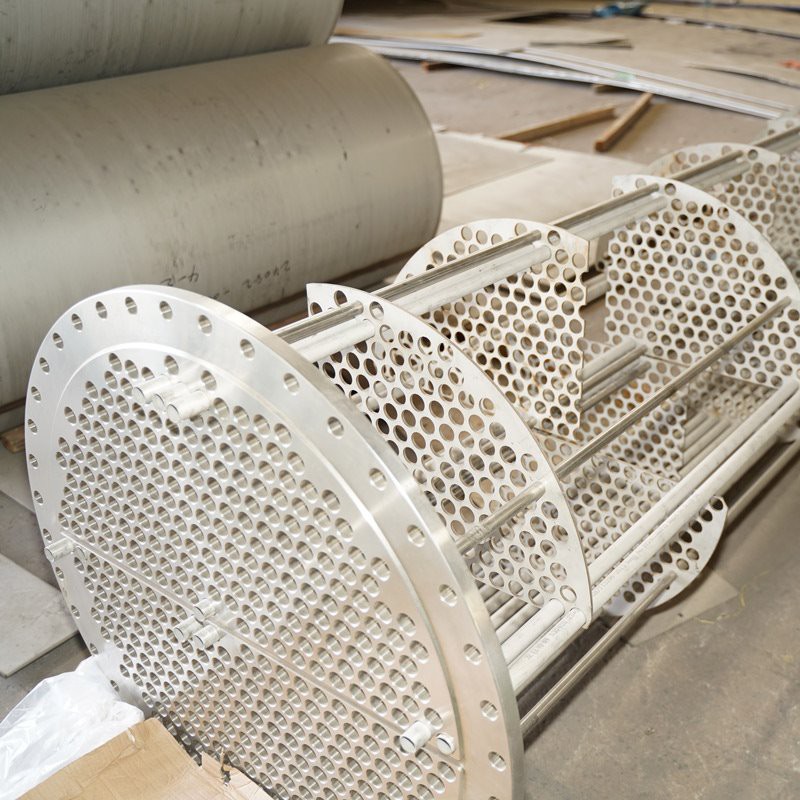

In addition, for applications where fouling is a concern due to high - viscosity fluids, we may recommend regular cleaning procedures and the use of anti - fouling coatings on the tube surfaces. These measures can help to maintain the long - term performance of the heat exchanger.
Impact on Different Types of Tubular Heat Exchangers
Our company offers a variety of tubular heat exchangers, including Pharmaceutical Tubular Heat Exchanger, Tubular Type Heat Exchanger, and Industrial Tubular Heat Exchanger. The effect of fluid viscosity can vary depending on the type of heat exchanger.
In pharmaceutical applications, the fluids used are often of relatively low viscosity, such as water - based solutions. However, in some cases, viscous pharmaceutical products or solvents may be involved. For Pharmaceutical Tubular Heat Exchanger, maintaining a high level of cleanliness and precise temperature control is crucial. High - viscosity fluids may require more careful design to ensure uniform heat transfer and prevent fouling, which could contaminate the pharmaceutical products.
Tubular Type Heat Exchanger can be used in a wide range of applications with different fluid viscosities. The design of these heat exchangers can be customized to accommodate various viscosity requirements. For example, in food processing applications where viscous fluids like syrups or sauces are used, the heat exchanger needs to be designed to handle the higher pressure drop and ensure efficient heat transfer.
Industrial Tubular Heat Exchanger often deal with a wide variety of fluids, including highly viscous industrial oils and chemicals. The design of these heat exchangers must consider the high - viscosity fluids' impact on pressure drop, heat transfer, and fouling. Special materials and construction techniques may be employed to withstand the harsh operating conditions associated with industrial applications.
Conclusion
Fluid viscosity has a profound impact on the performance of a compact tubular heat exchanger. It affects the heat transfer coefficient, pressure drop, and fouling rate, all of which are crucial factors in the overall efficiency and reliability of the heat exchanger. As a supplier of compact tubular heat exchangers, we understand the importance of considering fluid viscosity during the design and selection process.
If you are in need of a compact tubular heat exchanger for your specific application, whether it involves low - viscosity or high - viscosity fluids, we are here to provide you with the best solutions. Our team of experts can work with you to design and customize a heat exchanger that meets your requirements and maximizes the performance. Contact us today to start the procurement discussion and find the perfect heat exchanger for your needs.
References
- Incropera, F. P., & DeWitt, D. P. (2002). Fundamentals of Heat and Mass Transfer. John Wiley & Sons.
- Bird, R. B., Stewart, W. E., & Lightfoot, E. N. (2002). Transport Phenomena. John Wiley & Sons.
- Kakac, S., & Liu, H. (2002). Heat Exchangers: Selection, Rating, and Thermal Design. CRC Press.