

Hey there! As a supplier of compact tubular heat exchangers, I've seen firsthand how the tube diameter can have a huge impact on the performance of these nifty devices. In this blog, I'm gonna break down how tube diameter affects various aspects of a compact tubular heat exchanger's performance.
Heat Transfer Efficiency
One of the most important factors in a heat exchanger is its heat transfer efficiency. Simply put, we want to transfer as much heat as possible from one fluid to another in the most efficient way. The tube diameter plays a crucial role in this process.
When the tube diameter is smaller, the fluid flowing inside the tubes has a higher velocity. This increased velocity leads to a thinner boundary layer on the tube walls. The boundary layer is like a stagnant layer of fluid that resists heat transfer. A thinner boundary layer means less resistance to heat transfer, so more heat can be transferred from the hot fluid to the cold fluid.
For example, imagine you're trying to transfer heat from hot water to cold water in a tubular heat exchanger. If the tubes are very narrow, the hot water will rush through them quickly, and the heat will have an easier time getting through the thin boundary layer and into the cold water flowing on the outside of the tubes.
On the other hand, larger tube diameters result in lower fluid velocities. This leads to a thicker boundary layer, which reduces the heat transfer coefficient. The heat transfer coefficient is a measure of how well heat can be transferred between the fluids. A lower heat transfer coefficient means less efficient heat transfer. So, if you're looking for maximum heat transfer efficiency, smaller tube diameters are generally better. You can learn more about different types of tubular heat exchangers at Tubular Type Heat Exchanger.
Pressure Drop
Pressure drop is another important consideration when it comes to heat exchanger performance. Pressure drop refers to the decrease in pressure that occurs as a fluid flows through the heat exchanger.
Smaller tube diameters typically result in higher pressure drops. This is because the fluid has to squeeze through the narrow tubes, which creates more resistance to flow. As the fluid encounters more resistance, the pressure drops. High pressure drops can be a problem because they require more energy to pump the fluid through the heat exchanger. This can increase operating costs and may even limit the flow rate of the fluid.
Larger tube diameters, on the other hand, have lower pressure drops. The fluid can flow more easily through the wider tubes, so there's less resistance and less of a pressure drop. However, as we mentioned earlier, larger tube diameters also result in lower heat transfer efficiency. So, there's a trade - off between heat transfer efficiency and pressure drop.
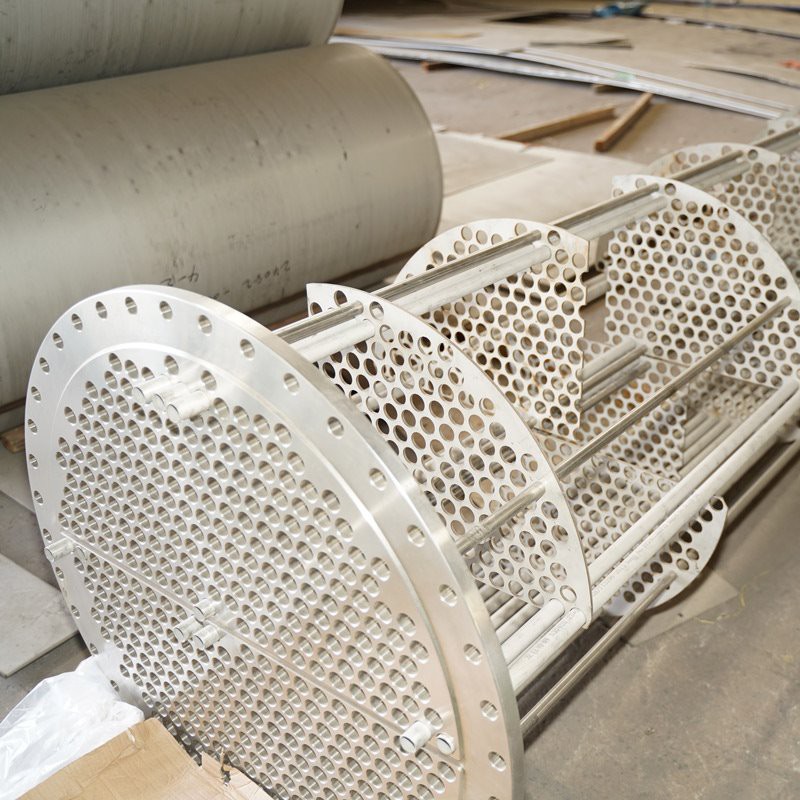

As a supplier, I often work with customers to find the right balance. Sometimes, a slightly higher pressure drop is acceptable if it means significantly better heat transfer. Other times, low pressure drop is a top priority, and we may need to use larger tube diameters even if it sacrifices some heat transfer efficiency. If you're interested in stainless - steel heat exchangers, check out Stainless Steel Heat Exchanger.
Fouling
Fouling is the accumulation of unwanted deposits on the tube walls of a heat exchanger. These deposits can include dirt, scale, and biological matter. Fouling can reduce the heat transfer efficiency and increase the pressure drop of a heat exchanger.
The tube diameter can affect fouling in several ways. Smaller tube diameters are more prone to fouling because the narrow passages make it easier for particles to get stuck. Once a few particles accumulate on the tube walls, they can attract more particles, leading to the formation of a thick layer of fouling.
Larger tube diameters are less likely to foul because the wider passages allow particles to pass through more easily. However, if fouling does occur in larger tubes, it can be more difficult to clean because the surface area of the tube walls is larger.
In applications where fouling is a major concern, such as in the pharmaceutical industry, we may recommend larger tube diameters or special anti - fouling coatings. You can find more information about pharmaceutical tubular heat exchangers at Pharmaceutical Tubular Heat Exchanger.
Cost
The tube diameter also has an impact on the cost of a compact tubular heat exchanger. Smaller tube diameters generally require more tubes to achieve the same heat transfer area. This means more material is needed for the tubes, which can increase the cost of the heat exchanger.
In addition, manufacturing heat exchangers with smaller tube diameters can be more difficult and time - consuming. The tubes need to be carefully assembled, and the connections between the tubes and the headers need to be precise. This can also add to the cost.
Larger tube diameters, on the other hand, require fewer tubes for the same heat transfer area. This reduces the amount of material needed and can make the manufacturing process simpler and less expensive. However, as we've seen, larger tube diameters may result in lower heat transfer efficiency, which could lead to a larger and more expensive heat exchanger overall if it needs to be oversized to achieve the desired heat transfer.
Choosing the Right Tube Diameter
So, how do you choose the right tube diameter for your compact tubular heat exchanger? Well, it depends on a variety of factors.
If heat transfer efficiency is your top priority, and you can tolerate a higher pressure drop and the risk of fouling, then smaller tube diameters may be the way to go. On the other hand, if low pressure drop, resistance to fouling, or cost are your main concerns, larger tube diameters may be more suitable.
It's also important to consider the specific application of the heat exchanger. For example, in a chemical process where precise temperature control is required, high heat transfer efficiency may be crucial. In a building's heating and cooling system, low pressure drop and cost may be more important.
As a supplier, I'm here to help you make the right decision. I can analyze your specific requirements and recommend the best tube diameter and heat exchanger design for your needs. Whether you're looking for a standard heat exchanger or a custom - designed solution, we've got you covered.
If you're interested in learning more about our compact tubular heat exchangers or want to discuss your specific requirements, don't hesitate to reach out. We're always happy to have a chat and help you find the perfect heat exchanger for your application.
References
- Incropera, F. P., & DeWitt, D. P. (2002). Fundamentals of Heat and Mass Transfer. Wiley.
- Shah, R. K., & Sekulic, D. P. (2003). Fundamentals of Heat Exchanger Design. Wiley.
- Kakac, S., & Liu, H. (2002). Heat Exchangers: Selection, Rating, and Thermal Design. CRC Press.