

Hey there! I'm a supplier of spiral heat exchangers, and I've been in this business for quite some time. One question I get asked a lot is, "How can I improve the energy efficiency of a spiral heat exchanger?" Well, you've come to the right place. In this blog post, I'll share some practical tips and tricks to help you get the most out of your spiral heat exchanger.
First off, let's understand what a spiral heat exchanger is. It's a type of heat exchanger that uses two long, flat plates that are coiled around a central core to create two spiral channels. One fluid flows through one channel, and the other fluid flows through the other channel in the opposite direction. This counter - current flow allows for efficient heat transfer between the two fluids.
1. Proper Sizing and Selection
The first step in improving energy efficiency is to make sure you've got the right size and type of spiral heat exchanger for your application. If you choose a heat exchanger that's too small, it won't be able to handle the required heat transfer rate, and it'll have to work harder, using more energy. On the other hand, if it's too large, it'll be inefficient because it won't be operating at its optimal capacity.
When selecting a spiral heat exchanger, consider factors like the flow rates of the fluids, the temperature difference between the hot and cold fluids, and the type of fluids being used. For example, if you're dealing with high - viscosity fluids, you might need a heat exchanger with a larger channel size to ensure proper flow. You can check out our Spiral Type Plate Heat Exchanger options, which come in different sizes and configurations to suit various applications.
2. Regular Maintenance
Maintenance is key to keeping your spiral heat exchanger running efficiently. Over time, deposits can build up on the heat transfer surfaces, which act as an insulator and reduce the heat transfer efficiency. These deposits can be caused by things like scale, corrosion, or fouling from the fluids.
Regular cleaning is essential to remove these deposits. You can use chemical cleaning agents or mechanical cleaning methods, depending on the type of deposit. For example, if it's a scale deposit, a chemical descaling agent might do the trick. Make sure to follow the manufacturer's guidelines when cleaning the heat exchanger to avoid damaging it.
Inspecting the heat exchanger for leaks is also important. Leaks can cause a loss of fluid and reduce the efficiency of the heat transfer process. Check the gaskets and welds regularly, and replace any damaged parts immediately. Our Welded Spiral Plate Heat Exchanger is designed to be durable, but regular inspections are still necessary to ensure optimal performance.
3. Optimize Fluid Flow
The way the fluids flow through the spiral heat exchanger can have a big impact on its energy efficiency. You want to make sure that the flow is evenly distributed across the channels to maximize heat transfer.
One way to optimize fluid flow is to use flow distributors. These devices help to evenly distribute the fluid entering the heat exchanger, reducing the chances of uneven flow and dead zones. Another thing to consider is the flow rate. If the flow rate is too low, the heat transfer will be inefficient because there won't be enough fluid movement to carry the heat away. On the other hand, if the flow rate is too high, it can increase the pressure drop and energy consumption.
You can use flow meters to monitor the flow rate and adjust it as needed. Also, make sure that the inlet and outlet connections are properly sized to avoid any restrictions in the flow.
4. Use High - Quality Materials
The materials used in the construction of the spiral heat exchanger can also affect its energy efficiency. High - quality materials with good thermal conductivity can transfer heat more effectively.
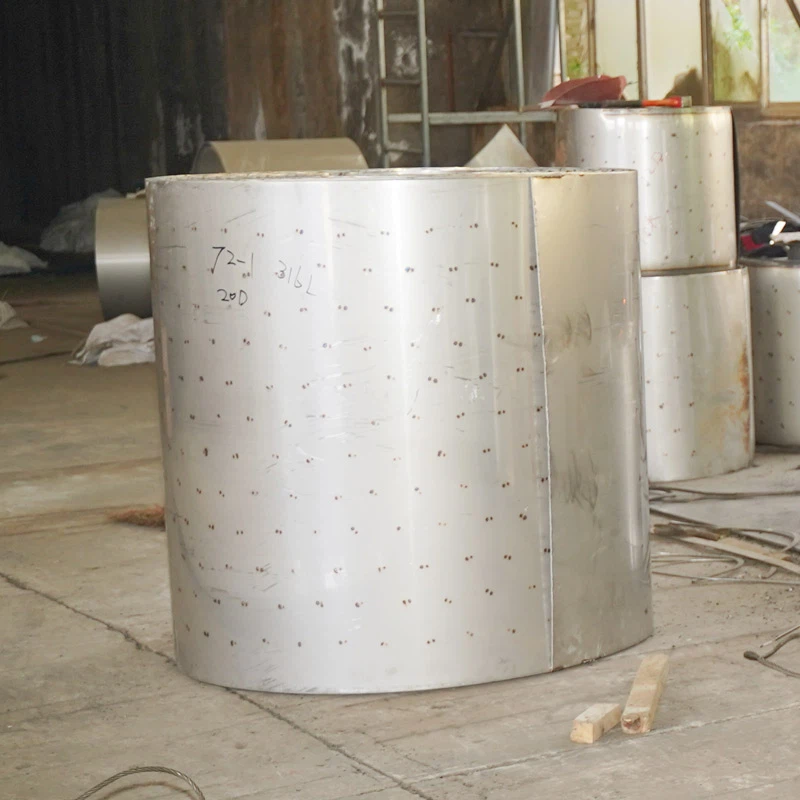
For example, Stainless Steel 304 316 Spiral Plate Heat Exchanger is a popular choice because stainless steel has excellent corrosion resistance and good thermal conductivity. It can withstand high temperatures and pressures, making it suitable for a wide range of applications. Using high - quality materials not only improves energy efficiency but also extends the lifespan of the heat exchanger.
5. Insulation
Insulating the spiral heat exchanger can help to reduce heat loss to the surroundings. Heat loss means that some of the energy that could be used for heat transfer is being wasted.
You can use insulation materials like fiberglass or foam to cover the heat exchanger. Make sure to insulate all the exposed parts, including the pipes and connections. This will not only improve energy efficiency but also make the heat exchanger safer to operate, as it reduces the risk of burns from hot surfaces.
6. Monitoring and Control
Implementing a monitoring and control system is crucial for maintaining energy efficiency. You can use sensors to measure parameters like temperature, pressure, and flow rate. By continuously monitoring these parameters, you can detect any changes in the performance of the heat exchanger and take corrective action before it becomes a major problem.
For example, if the temperature difference between the inlet and outlet of the hot fluid starts to decrease, it could be a sign of a problem, such as fouling or a leak. You can then adjust the operating conditions or schedule maintenance accordingly.
7. Training and Education
Lastly, make sure that the people operating and maintaining the spiral heat exchanger are properly trained. They should understand how the heat exchanger works, the importance of energy efficiency, and how to perform basic maintenance tasks.
Providing training and education can help to prevent mistakes that could lead to reduced energy efficiency. It can also empower the operators to make informed decisions about the operation and maintenance of the heat exchanger.

In conclusion, improving the energy efficiency of a spiral heat exchanger involves a combination of proper sizing and selection, regular maintenance, optimizing fluid flow, using high - quality materials, insulation, monitoring and control, and training. By following these tips, you can reduce energy consumption, save money, and extend the lifespan of your heat exchanger.
If you're interested in purchasing a spiral heat exchanger or need more information on how to improve its energy efficiency, don't hesitate to get in touch. We're here to help you find the best solution for your needs.
References
- Incropera, F. P., & DeWitt, D. P. (2002). Fundamentals of Heat and Mass Transfer. Wiley.
- Kakac, S., & Liu, H. (2002). Heat Exchangers: Selection, Rating, and Thermal Design. CRC Press.