

Shear strength is a critical mechanical property that determines a material's ability to withstand forces parallel to its cross - sectional area. In the context of plate heat exchanger gaskets, understanding shear strength properties is of utmost importance. As a supplier of plate heat exchanger gaskets, we have in - depth knowledge and practical experiences regarding these properties.
1. Defining Shear Strength in Plate Heat Exchanger Gaskets
Shear strength refers to the maximum stress that a plate heat exchanger gasket can endure before it deforms or fails under a shear force. A shear force in a plate heat exchanger occurs when the two mating plates of the heat exchanger move relative to each other in a parallel direction. This can happen due to various factors such as thermal expansion, vibration, or mechanical stress during the operation of the heat exchanger.
For example, in a large - scale industrial heat exchanger, the constant flow of hot and cold fluids can lead to thermal expansion and contraction of the plates. This movement can generate shear forces on the gaskets, and if the shear strength of the gaskets is insufficient, it may result in gasket failure. Gasket failure can cause leakage of the fluids, which not only reduces the efficiency of the heat exchanger but also poses safety risks, especially when dealing with hazardous or corrosive substances.
2. Factors Affecting the Shear Strength of Plate Heat Exchanger Gaskets
2.1 Material Composition
The type of material used in the gasket has a significant impact on its shear strength. Common materials for plate heat exchanger gaskets include nitrile rubber (NBR), ethylene - propylene - diene monomer (EPDM), and fluorocarbon rubber (FKM).
NBR gaskets are known for their good oil resistance and moderate shear strength. They are often used in applications where the heat exchanger is in contact with oils and fuels. EPDM gaskets, on the other hand, have excellent resistance to weathering, ozone, and steam. Their shear strength is relatively high, making them suitable for a wide range of industrial and HVAC applications. FKM gaskets offer superior chemical resistance and high - temperature stability, but their shear strength can be affected by the specific formulation and manufacturing process.
2.2 Manufacturing Process
The way the gaskets are manufactured also influences their shear strength. For instance, compression molding is a common manufacturing method for plate heat exchanger gaskets. In this process, the rubber material is placed in a mold, and pressure and heat are applied to shape it. If the compression ratio, temperature, and curing time during the molding process are not properly controlled, it can lead to non - uniform density and structure within the gasket, thereby reducing its shear strength.
Injection molding is another manufacturing technique. It allows for more precise control of the gasket's shape and dimensions. However, the flow of the rubber material during injection can create internal stresses, which may affect the shear strength if not relieved properly through post - molding treatments.
2.3 Design and Geometry
The design and geometry of the gasket play a crucial role in its shear strength. Gaskets with a larger contact area between the plates can distribute the shear forces more evenly, reducing the stress concentration at any single point. For example, a gasket with a wide sealing lip or multiple sealing ridges may have better shear strength performance compared to a simple, flat - shaped gasket.
The thickness of the gasket also matters. A thicker gasket may have higher shear strength in some cases, as it can absorb more energy before failure. However, an overly thick gasket may also be more prone to compression set and other issues, which can ultimately affect its sealing performance.
3. Testing the Shear Strength of Plate Heat Exchanger Gaskets
3.1 Standard Testing Methods
There are several standard testing methods available to measure the shear strength of gaskets. One of the commonly used methods is the ASTM D732 standard. This method measures the shear strength of a rubber specimen by applying a force parallel to the surface of the specimen until it fails.
In the context of plate heat exchanger gaskets, specialized test fixtures can be used to simulate the actual operating conditions of the heat exchanger. The gasket is placed between two metal plates, and a controlled shear force is applied to determine its shear strength. The test results are usually expressed in terms of stress (force per unit area), such as pounds per square inch (psi) or pascals (Pa).
3.2 In - Situ Testing
In addition to laboratory testing, in - situ testing can also provide valuable information about the shear strength of gaskets in real - world applications. This involves monitoring the performance of the gasket during the operation of the heat exchanger. For example, strain gauges can be attached to the gasket to measure the strain caused by shear forces, and sensors can be used to detect any leakage or deformation of the gasket.
4. Importance of Shear Strength in Different Applications
4.1 Industrial Applications
In industrial settings, such as chemical plants and power generation facilities, plate heat exchangers are often subjected to high - pressure and high - temperature conditions. The gaskets in these heat exchangers need to have sufficient shear strength to prevent leakage and ensure the reliable operation of the equipment. A single gasket failure can lead to costly downtime, environmental pollution, and safety hazards.
For example, in a chemical plant where corrosive chemicals are being processed, the gaskets must be able to withstand the shear forces generated by the flow of the chemicals and the thermal cycling of the heat exchanger. Failing to choose gaskets with appropriate shear strength can result in leaks of toxic substances, which can endanger the lives of workers and damage the environment.
4.2 HVAC Applications
In heating, ventilation, and air - conditioning (HVAC) systems, plate heat exchangers are used to transfer heat between the air and the refrigerant or other heat transfer fluids. The gaskets in these applications need to be able to withstand the shear forces caused by vibration and thermal expansion.
For instance, in a large - scale commercial building's HVAC system, the constant operation of the fans and pumps can generate vibrations that are transmitted to the heat exchanger. If the gaskets do not have sufficient shear strength, they may loosen or become damaged over time, leading to reduced energy efficiency and increased maintenance costs.
5. Our Offerings as a Plate Heat Exchanger Gasket Supplier
As a leading supplier of plate heat exchanger gaskets, we offer a wide range of gaskets with different materials, designs, and shear strength properties to meet the diverse needs of our customers. Our Plate Heat Exchanger Plate Gaskets are carefully engineered to provide optimal shear strength and sealing performance.

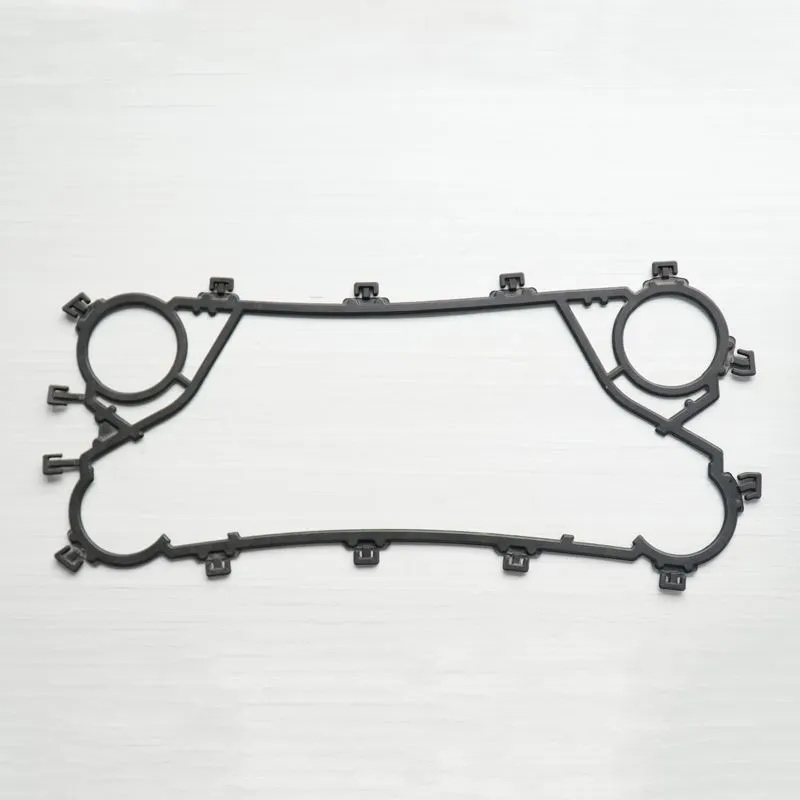
We use high - quality raw materials and advanced manufacturing processes to ensure the consistency and reliability of our gaskets. Our team of experts conducts rigorous testing on all our products to verify their shear strength and other mechanical properties. Whether you are looking for Heat Exchanger Gasket for industrial applications or PHE Gaskets for HVAC systems, we have the right solutions for you.
6. Contact Us for Procurement
If you are in the market for plate heat exchanger gaskets and need gaskets with specific shear strength properties, we invite you to get in touch with us. Our sales team is ready to discuss your requirements in detail and provide you with the best - suited products. We can offer technical support, product samples, and competitive pricing. Do not hesitate to start a procurement conversation with us to ensure the efficient and reliable operation of your heat exchanger systems.
References
- ASTM D732 - Standard Test Method for Shear Strength of Plastics by Punch Tool.
- "Engineering Properties of Elastomers: A Guide for Seals and Molded Rubber Products" by K. N. Ninan.
- "Heat Exchanger Design Handbook" by G. F. Hewitt.