

Hey there! As a supplier of tubular heat exchangers, I often get asked about the differences between shell-and-tube heat exchangers and other tubular heat exchangers. So, I thought I'd write this blog to break it down for you in a simple and easy-to-understand way.
First off, let's talk about what tubular heat exchangers are in general. Tubular heat exchangers are devices that transfer heat between two fluids through a series of tubes. They're widely used in various industries like chemical processing, power generation, and HVAC systems. You can check out more details about Tubular Type Heat Exchanger.
Shell-and-Tube Heat Exchangers
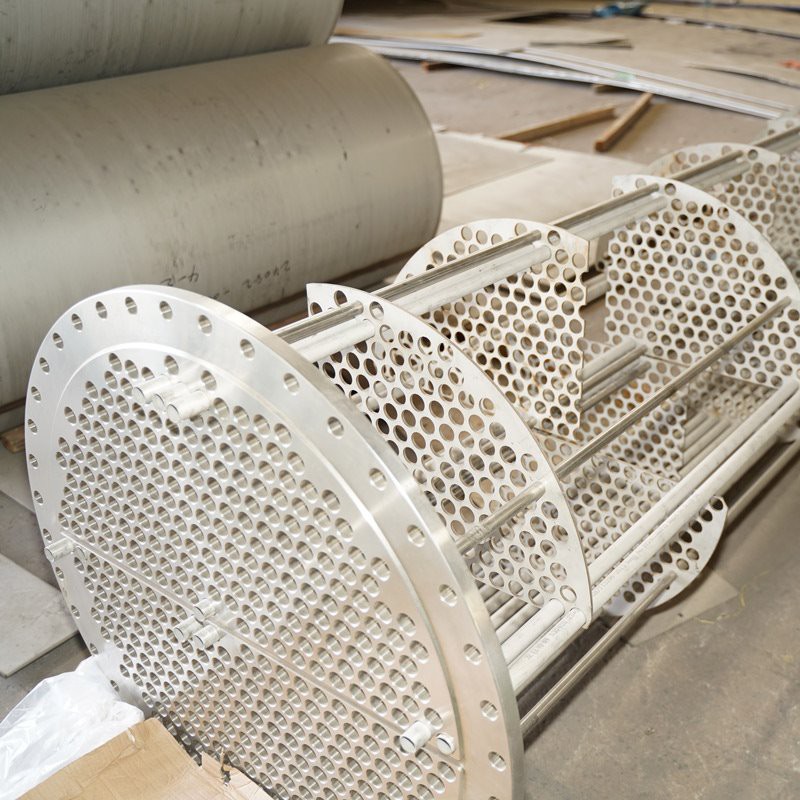
Shell-and-tube heat exchangers are one of the most common types of tubular heat exchangers. They consist of a large shell that houses a bundle of tubes. One fluid flows through the tubes, while the other flows outside the tubes, within the shell. This design allows for efficient heat transfer between the two fluids.
One of the main advantages of shell-and-tube heat exchangers is their versatility. They can handle a wide range of pressures and temperatures, making them suitable for many different applications. They're also relatively easy to maintain and repair. If a tube gets damaged, it can usually be replaced without having to replace the entire heat exchanger.
Another benefit is their high heat transfer efficiency. The large surface area provided by the tube bundle allows for a significant amount of heat to be transferred between the two fluids. This makes them ideal for applications where large amounts of heat need to be transferred, such as in power plants.
However, shell-and-tube heat exchangers also have some drawbacks. They're relatively large and heavy, which can make them difficult to install in some spaces. They also require a significant amount of space for the shell and tube bundle, which can be a limitation in some applications. Additionally, they can be more expensive to manufacture compared to some other types of tubular heat exchangers.
Other Tubular Heat Exchangers
There are several other types of tubular heat exchangers, each with its own unique features and applications. Let's take a look at some of the most common ones.
Double-Pipe Heat Exchangers
Double-pipe heat exchangers are the simplest type of tubular heat exchanger. They consist of two concentric pipes, with one fluid flowing through the inner pipe and the other flowing through the annular space between the two pipes.
The main advantage of double-pipe heat exchangers is their simplicity. They're easy to design, manufacture, and install. They're also relatively inexpensive compared to shell-and-tube heat exchangers. However, their heat transfer efficiency is lower because the surface area available for heat transfer is smaller. They're typically used in applications where the heat transfer requirements are relatively low, such as in small-scale heating and cooling systems.
Spiral Heat Exchangers
Spiral heat exchangers consist of two flat plates that are spiraled around a central core. One fluid flows through one spiral channel, while the other flows through the other spiral channel.
The advantage of spiral heat exchangers is their compact design. They can provide a large heat transfer area in a relatively small space. They're also less prone to fouling because the fluid flow is continuous and the channels are self-cleaning. However, they're more difficult to manufacture and repair compared to other types of tubular heat exchangers. They're commonly used in applications where space is limited and fouling is a concern, such as in the food and beverage industry.
Plate Heat Exchangers
Plate heat exchangers consist of a series of thin plates that are stacked together. The plates are separated by gaskets, which create channels for the fluids to flow through. One fluid flows through one set of channels, while the other flows through the adjacent channels.
Plate heat exchangers are known for their high heat transfer efficiency. The thin plates provide a large surface area for heat transfer, and the turbulent flow of the fluids between the plates enhances the heat transfer rate. They're also relatively compact and easy to install. However, they're more sensitive to pressure drops and can be more difficult to clean compared to some other types of tubular heat exchangers. They're commonly used in applications where high heat transfer efficiency is required, such as in refrigeration and air conditioning systems. You can learn more about Stainless Steel Tubular Heat Exchanger and Pharmaceutical Tubular Heat Exchanger for specific applications.
Key Differences
Now that we've looked at shell-and-tube heat exchangers and other tubular heat exchangers, let's summarize the key differences between them.
- Size and Weight: Shell-and-tube heat exchangers are generally larger and heavier than other types of tubular heat exchangers. This can make them more difficult to install and require more space.
- Heat Transfer Efficiency: Shell-and-tube heat exchangers typically have a high heat transfer efficiency due to the large surface area provided by the tube bundle. However, some other types of tubular heat exchangers, such as plate heat exchangers, can also have high heat transfer efficiencies.
- Cost: Shell-and-tube heat exchangers can be more expensive to manufacture compared to some other types of tubular heat exchangers, especially for smaller applications.
- Maintenance and Repair: Shell-and-tube heat exchangers are relatively easy to maintain and repair, as individual tubes can be replaced. Other types of tubular heat exchangers may be more difficult to repair, especially if they have a complex design.
- Application Suitability: Shell-and-tube heat exchangers are suitable for a wide range of applications, especially those with high pressure and temperature requirements. Other types of tubular heat exchangers are more suitable for specific applications, such as double-pipe heat exchangers for low heat transfer requirements and spiral heat exchangers for applications with limited space and fouling concerns.
Conclusion
In conclusion, the choice between a shell-and-tube heat exchanger and other tubular heat exchangers depends on several factors, including the specific application requirements, available space, budget, and maintenance considerations. As a tubular heat exchanger supplier, we can help you determine the best type of heat exchanger for your needs.
If you're in the market for a tubular heat exchanger, whether it's a shell-and-tube heat exchanger or another type, we'd love to have a chat with you. We can provide you with more information, answer your questions, and help you find the perfect heat exchanger for your application. So, don't hesitate to reach out and start the procurement discussion.

References
- Incropera, F. P., DeWitt, D. P., Bergman, T. L., & Lavine, A. S. (2007). Fundamentals of Heat and Mass Transfer. John Wiley & Sons.
- Green, D. W., & Perry, R. H. (2007). Perry's Chemical Engineers' Handbook. McGraw-Hill.