

Tubular heat exchangers are widely used in various industries for transferring heat between two fluids. One crucial component that plays a significant role in the proper functioning and longevity of these heat exchangers is the expansion joint. As a leading tubular heat exchanger supplier, I have witnessed firsthand the importance of expansion joints in ensuring the efficient and reliable operation of our products. In this blog post, I will delve into the role of expansion joints in tubular heat exchangers, exploring their functions, benefits, and considerations.
Understanding Tubular Heat Exchangers
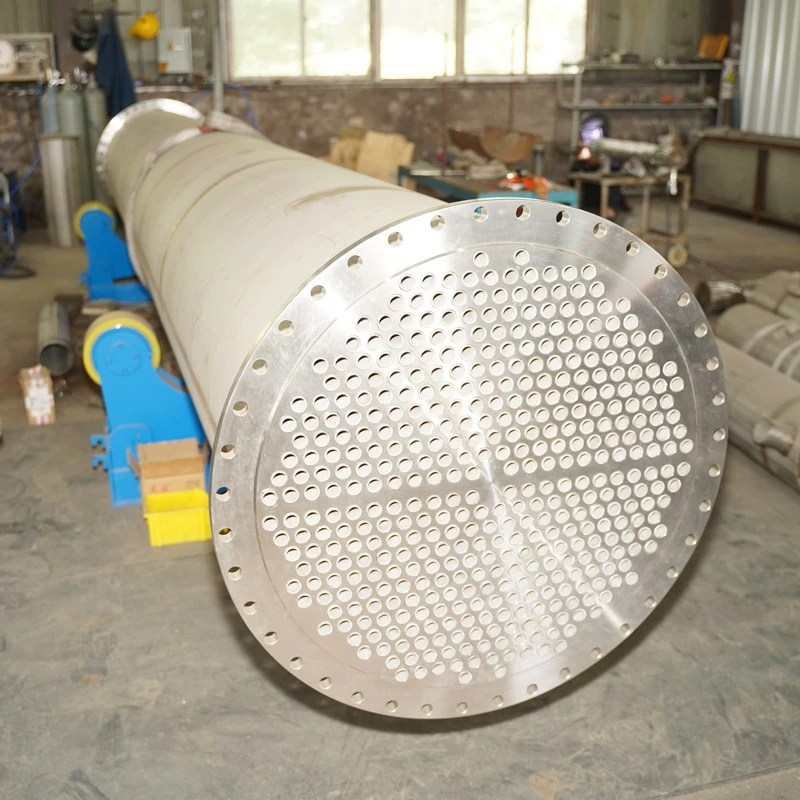
Before we discuss the role of expansion joints, let's briefly understand the basic structure and operation of tubular heat exchangers. A tubular heat exchanger consists of a series of tubes enclosed within a shell. One fluid flows through the tubes (tube side), while the other fluid flows outside the tubes in the shell (shell side). Heat is transferred from the hot fluid to the cold fluid through the tube walls, enabling efficient heat exchange.
Tubular heat exchangers are commonly used in applications such as chemical processing, power generation, oil and gas refining, and HVAC systems. They are known for their high heat transfer efficiency, compact design, and ability to handle a wide range of fluids and operating conditions.

The Need for Expansion Joints in Tubular Heat Exchangers
During the operation of a tubular heat exchanger, the tubes and the shell are subjected to thermal expansion and contraction due to temperature changes. When the fluids flowing through the heat exchanger have different temperatures, the tubes and the shell expand or contract at different rates. This differential expansion can create significant stresses within the heat exchanger, leading to various problems such as tube bending, tube-sheet cracking, and leakage.
Expansion joints are designed to accommodate these thermal expansions and contractions, thereby reducing the stresses on the heat exchanger components. They act as flexible connectors that allow the tubes and the shell to move independently, preventing damage and ensuring the structural integrity of the heat exchanger.
Functions of Expansion Joints in Tubular Heat Exchangers
1. Absorbing Thermal Expansion
The primary function of an expansion joint in a tubular heat exchanger is to absorb the thermal expansion and contraction of the tubes and the shell. As the temperature of the fluids changes, the expansion joint expands or contracts to accommodate the movement, preventing the buildup of excessive stresses. This helps to protect the tubes, tube sheets, and other components from damage and ensures the long-term reliability of the heat exchanger.
2. Reducing Vibration and Noise
In addition to thermal expansion, tubular heat exchangers can also be subjected to vibration and noise during operation. These vibrations can be caused by fluid flow, mechanical forces, or external factors. Expansion joints can help to reduce vibration and noise by acting as dampers, absorbing the energy generated by the vibrations and preventing them from being transmitted to other parts of the heat exchanger.
3. Compensating for Misalignment
During the installation and operation of a tubular heat exchanger, it is possible for the tubes and the shell to become misaligned. This misalignment can be caused by factors such as improper installation, thermal expansion, or mechanical stress. Expansion joints can compensate for this misalignment by allowing the tubes and the shell to move relative to each other, ensuring that the heat exchanger operates smoothly and efficiently.
4. Preventing Leakage
Leakage is a common problem in tubular heat exchangers, especially in applications where the fluids being processed are corrosive or high-pressure. Expansion joints can help to prevent leakage by providing a flexible seal between the tubes and the shell. They can accommodate the movement of the tubes and the shell without compromising the integrity of the seal, ensuring that the heat exchanger operates safely and reliably.
Benefits of Using Expansion Joints in Tubular Heat Exchangers
1. Extended Service Life
By absorbing thermal expansion and reducing stresses, expansion joints can significantly extend the service life of a tubular heat exchanger. They help to prevent damage to the tubes, tube sheets, and other components, reducing the need for frequent repairs and replacements. This can result in significant cost savings for the end-user over the life of the heat exchanger.
2. Improved Efficiency
Expansion joints can also improve the efficiency of a tubular heat exchanger by reducing the resistance to fluid flow. By allowing the tubes and the shell to move freely, expansion joints can prevent the formation of flow restrictions and turbulence, ensuring that the heat exchanger operates at its optimal performance. This can result in lower energy consumption and higher heat transfer efficiency.
3. Enhanced Safety
In applications where the fluids being processed are hazardous or high-pressure, the use of expansion joints can enhance the safety of the tubular heat exchanger. By preventing leakage and reducing the risk of component failure, expansion joints can help to protect the environment and the personnel working with the heat exchanger.
4. Flexibility in Design
Expansion joints offer flexibility in the design of tubular heat exchangers. They can be customized to meet the specific requirements of the application, such as the size, shape, and operating conditions of the heat exchanger. This allows for the design of more efficient and reliable heat exchangers that can be tailored to the needs of the end-user.
Considerations When Selecting Expansion Joints for Tubular Heat Exchangers
When selecting expansion joints for a tubular heat exchanger, several factors need to be considered to ensure that the expansion joints are suitable for the application. These factors include:
1. Operating Conditions
The operating conditions of the tubular heat exchanger, such as the temperature, pressure, and fluid properties, will determine the type and material of the expansion joint required. For example, in high-temperature applications, expansion joints made of materials such as stainless steel or nickel alloys may be required to withstand the thermal stresses.
2. Movement Requirements
The amount and type of movement that the expansion joint needs to accommodate will also affect the selection. Expansion joints can be designed to accommodate axial, lateral, or angular movement, depending on the specific requirements of the heat exchanger.
3. Installation Space
The available installation space for the expansion joint is another important consideration. Expansion joints come in various sizes and shapes, and it is important to select a joint that can fit within the available space without interfering with other components of the heat exchanger.
4. Cost
The cost of the expansion joint is also a factor to consider. While it is important to select a high-quality expansion joint that meets the requirements of the application, it is also important to consider the cost-effectiveness of the joint.
Types of Expansion Joints Used in Tubular Heat Exchangers
There are several types of expansion joints that can be used in tubular heat exchangers, each with its own advantages and disadvantages. Some of the most common types of expansion joints include:
1. Bellows Expansion Joints
Bellows expansion joints are the most widely used type of expansion joint in tubular heat exchangers. They consist of a series of convolutions that can expand and contract to accommodate thermal expansion and contraction. Bellows expansion joints are available in a variety of materials, including stainless steel, carbon steel, and nickel alloys, and can be designed to accommodate different types of movement.
2. Slip Expansion Joints
Slip expansion joints consist of a sliding sleeve that allows the tube to move freely within the shell. They are typically used in applications where the movement is primarily axial and where the operating conditions are relatively mild. Slip expansion joints are relatively simple in design and are often less expensive than bellows expansion joints.
3. Universal Expansion Joints
Universal expansion joints are designed to accommodate both axial and lateral movement. They consist of two bellows connected by a center pipe or a tie rod. Universal expansion joints are commonly used in applications where the heat exchanger is subject to complex movement patterns.
Our Tubular Heat Exchanger Products
As a tubular heat exchanger supplier, we offer a wide range of high-quality tubular heat exchangers to meet the diverse needs of our customers. Our products include Duplex Stainless Steel Tubular Heat Exchanger, Mild Steel Tubular Heat Exchanger, and Industrial Tubular Heat Exchanger. All our heat exchangers are designed and manufactured to the highest standards, using the latest technology and materials to ensure optimal performance and reliability.
Conclusion
In conclusion, expansion joints play a crucial role in the proper functioning and longevity of tubular heat exchangers. They absorb thermal expansion, reduce vibration and noise, compensate for misalignment, and prevent leakage, ensuring the efficient and reliable operation of the heat exchanger. By selecting the right type of expansion joint and considering the various factors involved, it is possible to design and operate a tubular heat exchanger that meets the specific requirements of the application.
If you are interested in learning more about our tubular heat exchangers or need assistance in selecting the right expansion joint for your application, please do not hesitate to contact us. Our team of experts is always ready to provide you with the information and support you need to make an informed decision. We look forward to the opportunity to work with you and help you find the best solution for your heat transfer needs.
References
- Green, Don W., and Robert H. Perry. Perry's Chemical Engineers' Handbook. McGraw-Hill Education, 2018.
- Hewitt, G. F., G. L. Shires, and T. R. Bott. Process Heat Transfer. CRC Press, 1994.
- Incropera, Frank P., et al. Fundamentals of Heat and Mass Transfer. John Wiley & Sons, 2017.