

Hey there! As a supplier of multi tubular heat exchangers, I've had my fair share of dealing with the nitty - gritty details of these amazing pieces of equipment. One question that often pops up is: What is the role of the inlet and outlet nozzles in a multi tubular heat exchanger? Well, let's dive right in and find out.
The Basics of a Multi Tubular Heat Exchanger
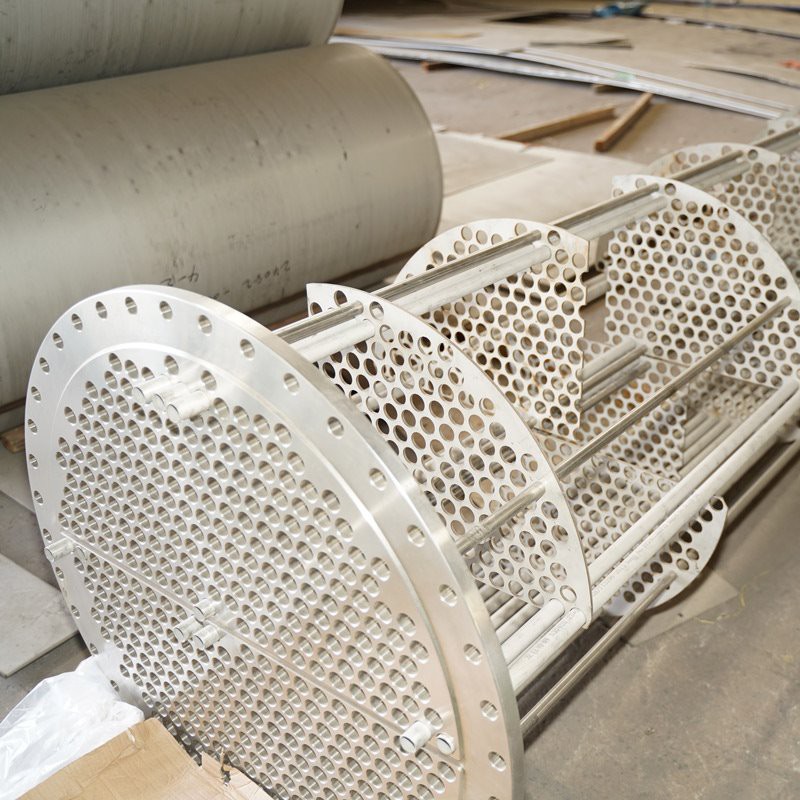
Before we talk about the nozzles, let's quickly go over what a multi tubular heat exchanger is. It's a device that transfers heat between two fluids. You've got a bundle of tubes inside a shell. One fluid flows through the tubes (tube - side fluid), and the other flows outside the tubes, in the shell (shell - side fluid). This setup allows for efficient heat transfer between the two fluids.
The Role of Inlet Nozzles
The inlet nozzles are like the entry points for the fluids into the heat exchanger. They play a crucial role in getting the fluids into the system in the right way.
Flow Distribution
One of the main jobs of the inlet nozzles is to distribute the fluid evenly. For the tube - side fluid, the inlet nozzle needs to direct the fluid into each of the tubes in the bundle. If the flow isn't evenly distributed, some tubes might get more fluid than others. This can lead to uneven heat transfer, which is a big no - no. For example, if a few tubes get a lot of fluid while others get very little, the tubes with less fluid might overheat, and the overall efficiency of the heat exchanger will drop.
On the shell - side, the inlet nozzle has to spread the fluid across the shell in a way that it can flow around all the tubes. A well - designed inlet nozzle will create a uniform flow pattern, ensuring that every part of the tube bundle gets in contact with the shell - side fluid for effective heat transfer.
Pressure Control
Inlet nozzles also help in controlling the pressure of the incoming fluid. When the fluid enters the heat exchanger through the nozzle, the shape and size of the nozzle can affect the pressure drop. A properly designed nozzle will minimize the pressure drop, so that the fluid can enter the heat exchanger without losing too much energy. If the pressure drop is too high, it might require more energy to pump the fluid through the system, which can increase operating costs.
The Role of Outlet Nozzles
Just as important as the inlet nozzles are the outlet nozzles. They are the exit points for the fluids after they've gone through the heat transfer process.
Collecting the Fluid
The outlet nozzles collect the fluids after they've exchanged heat. On the tube - side, the outlet nozzle has to gather the fluid from all the tubes in the bundle. It needs to do this in a way that doesn't cause any back - pressure or flow restrictions. If there are flow restrictions at the outlet, it can affect the flow rate through the tubes and reduce the overall performance of the heat exchanger.
On the shell - side, the outlet nozzle has to collect the fluid that has flowed around the tubes. It should ensure that all the fluid is properly removed from the shell, so that there are no stagnant areas where the fluid might accumulate and cause problems like corrosion or fouling.
Maintaining Flow Stability
Outlet nozzles also help in maintaining the stability of the fluid flow. They need to allow the fluid to exit the heat exchanger smoothly. A sudden change in the flow at the outlet can cause vibrations in the heat exchanger, which can damage the tubes and other components over time. A well - designed outlet nozzle will prevent such issues and ensure a stable flow of the fluid out of the system.
Importance of Nozzle Design
The design of the inlet and outlet nozzles is super important. The size, shape, and orientation of the nozzles can all have a big impact on the performance of the multi tubular heat exchanger.
Size
The size of the nozzles needs to be carefully chosen based on the flow rate of the fluids. If the nozzles are too small, they can cause a high pressure drop and restrict the flow. On the other hand, if they are too large, it might lead to uneven flow distribution. For example, in a large - scale industrial heat exchanger where high flow rates are required, larger nozzles might be needed to accommodate the fluid volume.
Shape
The shape of the nozzles can also affect the flow characteristics. Some nozzles are designed with a tapered shape to gradually change the velocity of the fluid. This can help in reducing turbulence and pressure drop. For instance, a converging - diverging nozzle can be used to control the flow velocity and pressure in a more precise way.
Orientation
The orientation of the nozzles matters too. The inlet and outlet nozzles should be placed in a way that allows for easy connection to the piping system. They also need to be positioned to ensure proper flow distribution and collection. For example, in some heat exchangers, the inlet and outlet nozzles might be placed on opposite ends of the shell to create a counter - flow arrangement, which is more efficient for heat transfer.
Applications and Nozzle Considerations
Multi tubular heat exchangers are used in a wide range of industries, and the requirements for the inlet and outlet nozzles can vary depending on the application.
Chemical Industry
In the chemical industry, heat exchangers are used for processes like distillation, reaction heating, and cooling. The fluids used in these processes can be corrosive or have high viscosities. The inlet and outlet nozzles need to be made of materials that can withstand the corrosive nature of the fluids. Also, for high - viscosity fluids, the nozzle design might need to be adjusted to ensure proper flow.
Pharmaceutical Industry
The pharmaceutical industry has strict requirements for hygiene and purity. Pharmaceutical Heat Exchanger and Pharmaceutical Tubular Heat Exchanger need to have inlet and outlet nozzles that are easy to clean and sterilize. Stainless steel is often used for the nozzles in these applications because of its corrosion resistance and ease of cleaning. You can check out our Stainless Steel Heat Exchanger for more information on suitable options.
Food and Beverage Industry
In the food and beverage industry, the heat exchangers are used for pasteurization, cooling, and heating processes. The nozzles need to be designed to prevent any contamination of the food or beverage products. They should be smooth and free of any crevices where bacteria or other contaminants might accumulate.
Why Our Multi Tubular Heat Exchangers Stand Out
At our company, we understand the importance of well - designed inlet and outlet nozzles. We use the latest engineering techniques to design nozzles that ensure optimal flow distribution, pressure control, and overall performance. Our nozzles are carefully sized, shaped, and oriented to meet the specific requirements of different applications.
We also offer a wide range of materials for the nozzles, including stainless steel, which is great for applications where corrosion resistance and hygiene are important. Whether you're in the chemical, pharmaceutical, or food and beverage industry, we can provide you with a multi tubular heat exchanger that has the right nozzles for your needs.
Get in Touch for Your Heat Exchanger Needs
If you're in the market for a multi tubular heat exchanger, don't hesitate to reach out. We're here to answer any questions you might have and help you find the perfect heat exchanger for your application. Our team of experts can work with you to understand your requirements and recommend the best solutions. Contact us today to start the conversation about your heat exchanger project.

References
- Incropera, F. P., & DeWitt, D. P. (2002). Fundamentals of Heat and Mass Transfer. Wiley.
- Shah, R. K., & Sekulic, D. P. (2003). Fundamentals of Heat Exchanger Design. Wiley.