

Hey there! As a supplier of plate type heat exchanger gaskets, I often get asked about the thermal conductivity of these gaskets. So, I thought I'd dive into this topic and share some insights with you.
First off, let's understand what thermal conductivity is. In simple terms, thermal conductivity is a measure of a material's ability to conduct heat. It's like how well a material can pass on heat from one place to another. For plate type heat exchanger gaskets, this property is super important because it can affect the overall performance of the heat exchanger.
Now, the thermal conductivity of plate type heat exchanger gaskets can vary quite a bit depending on the material they're made of. There are several common materials used for these gaskets, and each has its own unique thermal conductivity characteristics.
One of the most widely used materials for plate type heat exchanger gaskets is rubber. Rubber gaskets are known for their flexibility, good sealing properties, and resistance to a wide range of chemicals. But when it comes to thermal conductivity, rubber is generally a poor conductor of heat. This is because rubber has a relatively low density and a lot of air pockets within its structure, which act as insulators and slow down the transfer of heat. The thermal conductivity of rubber gaskets typically ranges from about 0.1 to 0.5 W/(m·K). This low thermal conductivity can be an advantage in some cases, for example, when you want to prevent heat loss from the heat exchanger or when you need to isolate different temperature zones within the system.
Another popular material is graphite. Graphite gaskets have a much higher thermal conductivity compared to rubber. Graphite is a form of carbon with a unique crystal structure that allows heat to be transferred more easily through its layers. The thermal conductivity of graphite gaskets can range from around 10 to 100 W/(m·K), depending on the purity and structure of the graphite. This high thermal conductivity makes graphite gaskets a great choice when you need efficient heat transfer between the plates of the heat exchanger. They can help to improve the overall heat transfer efficiency of the system and reduce energy consumption.
Then there are PTFE (Polytetrafluoroethylene) gaskets. PTFE is a synthetic fluoropolymer that is known for its excellent chemical resistance, low friction coefficient, and high temperature resistance. However, PTFE also has a relatively low thermal conductivity, similar to rubber. The thermal conductivity of PTFE gaskets is usually in the range of 0.2 to 0.4 W/(m·K). While this low thermal conductivity may not be ideal for applications where high heat transfer is required, PTFE gaskets are often used in environments where chemical resistance is the primary concern.
So, how do you choose the right gasket material based on thermal conductivity? Well, it really depends on your specific application. If you're working on a heat exchanger that needs to transfer a large amount of heat quickly, then a material with high thermal conductivity like graphite might be the way to go. On the other hand, if you need to prevent heat loss or protect sensitive components from high temperatures, a gasket with low thermal conductivity such as rubber or PTFE could be more suitable.
It's also important to note that the thermal conductivity of a gasket is not the only factor to consider when selecting a gasket for a plate type heat exchanger. Other factors like sealing performance, chemical resistance, temperature resistance, and mechanical strength also play crucial roles. For example, even if a gasket has high thermal conductivity, it won't be effective if it can't provide a good seal and prevent fluid leakage.
At our company, we offer a wide range of Plate Heat Exchanger Sealing Gasket made from different materials to meet the diverse needs of our customers. Whether you need a gasket with high thermal conductivity for efficient heat transfer or a gasket with excellent chemical resistance for a harsh environment, we've got you covered.
If you're interested in learning more about the Plate Heat Exchanger Gasket Material we offer, you can visit our website. We have detailed information about each material, including its thermal conductivity, sealing properties, and recommended applications.
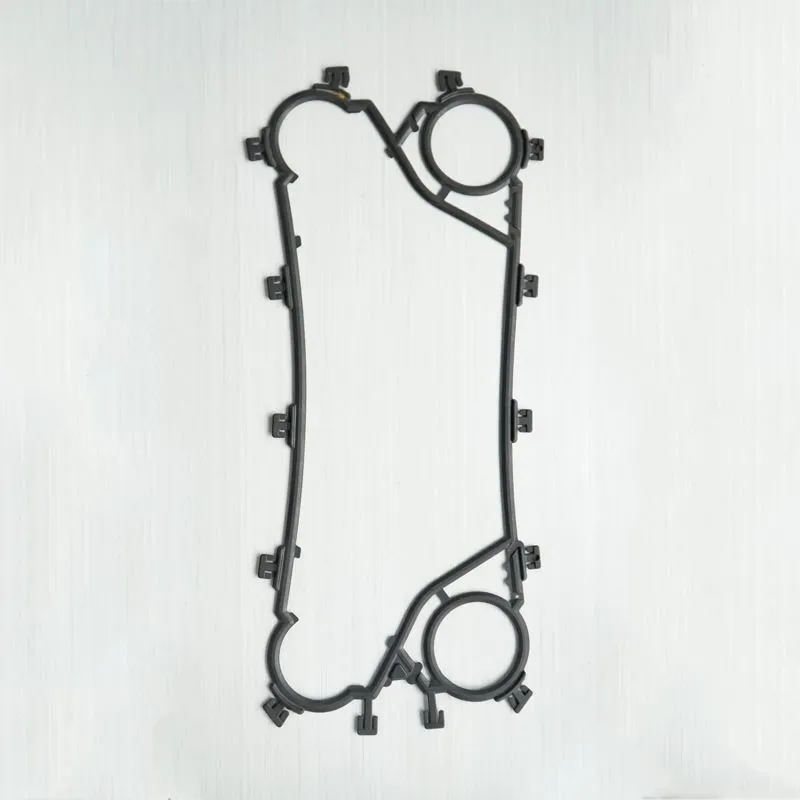

In addition to thermal conductivity and material selection, proper installation and maintenance of the gaskets are also essential for the optimal performance of the plate type heat exchanger. Make sure to follow the manufacturer's instructions when installing the gaskets to ensure a proper seal. Regular inspection and replacement of the gaskets can also help to prevent leaks and extend the lifespan of the heat exchanger.
If you're in the market for Heat Exchanger Sealing Gasket, don't hesitate to reach out to us. We have a team of experts who can help you choose the right gasket for your specific application and provide you with all the support you need. Whether you have a small-scale project or a large industrial application, we're committed to providing you with high-quality gaskets and excellent customer service.
In conclusion, the thermal conductivity of plate type heat exchanger gaskets is an important factor that can significantly impact the performance of the heat exchanger. By understanding the thermal conductivity characteristics of different gasket materials and considering other factors like sealing performance and chemical resistance, you can make an informed decision when selecting a gasket for your application. If you have any questions or need further assistance, feel free to contact us. We're here to help you find the perfect solution for your heat exchanger needs.
References
- Incropera, F. P., & DeWitt, D. P. (2002). Fundamentals of Heat and Mass Transfer. John Wiley & Sons.
- Holman, J. P. (2002). Heat Transfer. McGraw-Hill.