

Hey there! As a supplier of spiral heat exchangers, I'm super excited to share with you the ins and outs of how these nifty devices work. Spiral heat exchangers are awesome pieces of equipment that have a wide range of applications in various industries. So, let's dive right in and explore their working principle.
The Basics of a Spiral Heat Exchanger
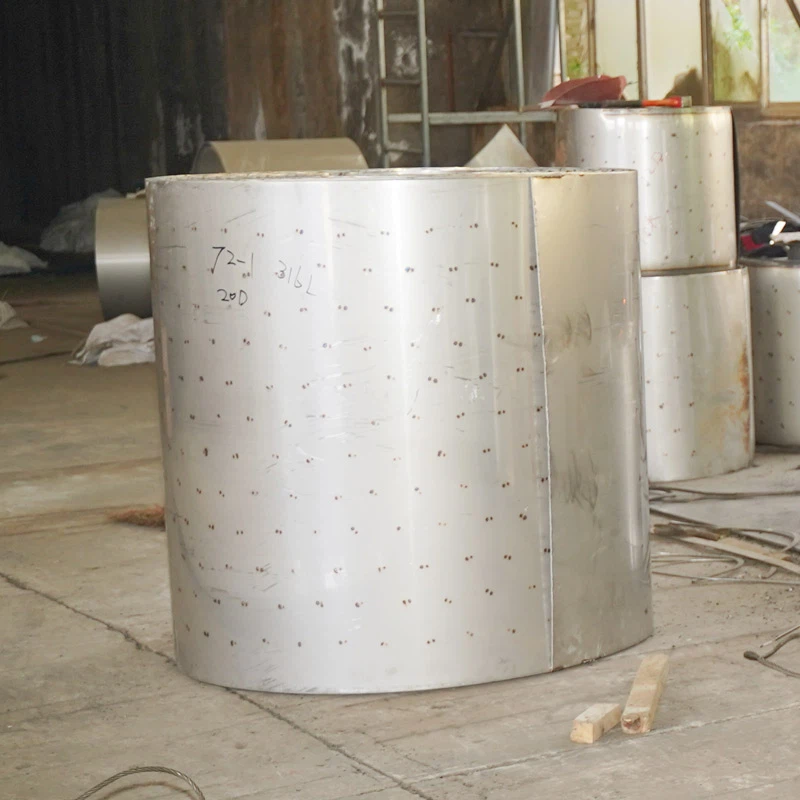
First off, what exactly is a spiral heat exchanger? Well, it's a type of heat exchanger that consists of two long, flat metal plates that are coiled around a central core to form two concentric spiral channels. These channels are where the magic happens, as they allow two different fluids to flow through them in opposite directions, enabling efficient heat transfer between the two fluids.

How Heat Transfer Occurs
The working principle of a spiral heat exchanger is based on the fundamental concept of heat transfer. Heat always flows from a region of higher temperature to a region of lower temperature. In a spiral heat exchanger, one fluid, known as the hot fluid, enters the exchanger at a high temperature, while the other fluid, the cold fluid, enters at a lower temperature.
As the hot and cold fluids flow through their respective spiral channels, heat is transferred from the hot fluid to the cold fluid through the metal plates separating the two channels. This transfer of heat occurs due to the temperature difference between the two fluids and the large surface area provided by the spiral plates.
Counter - Current Flow
One of the key features of a spiral heat exchanger is the counter - current flow arrangement. This means that the hot and cold fluids flow in opposite directions through their respective channels. Counter - current flow is highly efficient for heat transfer because it maintains a relatively constant temperature difference between the two fluids along the length of the exchanger.
Let's say the hot fluid enters the exchanger at a temperature of (T_{h1}) and leaves at (T_{h2}), while the cold fluid enters at (T_{c1}) and leaves at (T_{c2}). In a counter - current flow, the temperature difference (\Delta T=(T_{h}-T_{c})) remains relatively large throughout the exchanger, which maximizes the rate of heat transfer.
In contrast, in a parallel - flow arrangement, where the two fluids flow in the same direction, the temperature difference between the two fluids decreases as they move through the exchanger, resulting in less efficient heat transfer.
Advantages of Spiral Design
The spiral design of the heat exchanger offers several advantages. Firstly, the spiral shape provides a large surface area for heat transfer in a relatively compact space. This means that a spiral heat exchanger can achieve a high heat transfer rate while taking up less floor space compared to other types of heat exchangers.
Secondly, the continuous spiral channels help to prevent fouling. Fouling occurs when deposits build up on the heat transfer surfaces, reducing the efficiency of the exchanger. In a spiral heat exchanger, the swirling flow of the fluids helps to keep the surfaces clean by scouring away any potential deposits.
Applications
Spiral heat exchangers are used in a variety of industries. In the chemical industry, they are used for heating and cooling chemical processes, such as in the production of fertilizers, plastics, and pharmaceuticals. In the food and beverage industry, they are used for pasteurization, cooling of dairy products, and heating of juices.
In the power generation industry, spiral heat exchangers can be used for cooling condensers and pre - heating feedwater. They are also used in the oil and gas industry for heat recovery and process cooling.
Types of Spiral Heat Exchangers
We offer different types of spiral heat exchangers to meet the diverse needs of our customers. For example, we have the Vertical Spiral Heat Exchanger. This type is suitable for applications where vertical installation is preferred, such as in some industrial plants with limited horizontal space.
Our Stainless Steel 304 316 Spiral Plate Heat Exchanger is made from high - quality stainless steel, which provides excellent corrosion resistance. This makes it ideal for use in corrosive environments, such as in chemical processing plants.
We also have the Detachable Spiral Plate Heat Exchanger. This type is convenient for maintenance and cleaning, as the plates can be easily removed for inspection and servicing.
Factors Affecting Performance
Several factors can affect the performance of a spiral heat exchanger. The flow rate of the fluids is an important factor. If the flow rate is too low, the heat transfer rate will be reduced because there will be less fluid available to transfer heat. On the other hand, if the flow rate is too high, there may be excessive pressure drop, which can increase the energy consumption of the system.
The physical properties of the fluids, such as their thermal conductivity, viscosity, and specific heat, also play a role. Fluids with high thermal conductivity will transfer heat more efficiently, while highly viscous fluids may require more energy to pump through the exchanger.
Maintenance
Proper maintenance is crucial to ensure the long - term performance of a spiral heat exchanger. Regular inspection of the exchanger for any signs of fouling, leaks, or damage is essential. If fouling is detected, appropriate cleaning methods should be used to remove the deposits.
The gaskets and seals should also be checked regularly to prevent any leakage of the fluids. In case of any damage to the plates or other components, they should be repaired or replaced promptly.
Contact Us for Your Heat Exchanger Needs
If you're in the market for a high - quality spiral heat exchanger, we're here to help. Our team of experts can assist you in selecting the right type of heat exchanger for your specific application. Whether you need a Vertical Spiral Heat Exchanger, a Stainless Steel 304 316 Spiral Plate Heat Exchanger, or a Detachable Spiral Plate Heat Exchanger, we've got you covered.
We offer competitive pricing, excellent customer service, and reliable products. So, don't hesitate to get in touch with us to discuss your requirements and start the procurement process.
References
- Incropera, F. P., & DeWitt, D. P. (2002). Fundamentals of Heat and Mass Transfer. John Wiley & Sons.
- Hewitt, G. F., Shires, G. L., & Bott, T. R. (1994). Process Heat Transfer. CRC Press.