

Tubular heat exchangers are essential components in a wide range of industrial processes, playing a crucial role in transferring heat between two fluids. As a reputable tubular heat exchanger supplier, I am well - versed in the various types of tubular heat exchangers available in the market. In this blog, I will explore different types of tubular heat exchangers, their characteristics, applications, and advantages.
Shell and Tube Heat Exchangers
Shell and tube heat exchangers are perhaps the most common type of tubular heat exchangers. They consist of a bundle of tubes enclosed within a shell. One fluid flows through the tubes, while the other flows outside the tubes within the shell.
The design of shell and tube heat exchangers offers several benefits. Firstly, they can handle high - pressure and high - temperature applications. The tubes are able to withstand the internal pressure of the fluid flowing through them, and the shell provides a robust enclosure for the tube bundle. Secondly, they have a large heat transfer area, which allows for efficient heat transfer between the two fluids. This makes them suitable for large - scale industrial processes such as power generation, chemical processing, and oil refining.
There are different configurations of shell and tube heat exchangers, including fixed - tube - sheet, floating - head, and U - tube designs. Fixed - tube - sheet heat exchangers are the simplest and most cost - effective. The tube sheets are welded to the shell, which makes them easy to manufacture. However, they are not suitable for applications where there is a large difference in temperature between the two fluids, as the thermal expansion can cause stress on the tubes and tube sheets.
Floating - head heat exchangers, on the other hand, have one tube sheet that is free to move within the shell. This design allows for thermal expansion and contraction, making them suitable for applications with large temperature differences. U - tube heat exchangers have U - shaped tubes, which also provide flexibility for thermal expansion. They are often used in applications where the fluid on the tube side needs to be easily accessible for cleaning or maintenance.
Double - Pipe Heat Exchangers
Double - pipe heat exchangers are relatively simple in design. They consist of one pipe inside another, with one fluid flowing through the inner pipe and the other flowing through the annular space between the two pipes.
The main advantage of double - pipe heat exchangers is their simplicity and ease of construction. They are also highly flexible and can be easily modified or expanded to meet changing process requirements. Double - pipe heat exchangers are often used in small - scale applications, such as laboratory setups, and in situations where the heat transfer requirements are relatively low.
Another benefit of double - pipe heat exchangers is their ability to handle high - viscosity fluids. The annular space provides a larger flow area for the fluid, which reduces the pressure drop and allows for better heat transfer. They are also suitable for applications where there is a need for counter - current flow, which can enhance the heat transfer efficiency.
Spiral Tubular Heat Exchangers
Spiral tubular heat exchangers are designed with two concentric spiral tubes. One fluid flows through the inner spiral tube, while the other flows through the outer spiral tube. This design creates a continuous counter - current flow pattern, which maximizes the heat transfer efficiency.
Spiral tubular heat exchangers are compact in size and can provide a large heat transfer area in a relatively small space. They are also less prone to fouling compared to other types of heat exchangers, as the spiral flow pattern helps to prevent the accumulation of deposits on the tube surfaces.
These heat exchangers are commonly used in applications where space is limited, such as in the food and beverage industry, pharmaceutical manufacturing, and HVAC systems. They are also suitable for applications where there is a need for high - efficiency heat transfer with a relatively small temperature difference between the two fluids.
Compact Tubular Heat Exchanger
Compact tubular heat exchangers are designed to provide a high heat transfer rate in a small volume. They are typically constructed with a large number of small - diameter tubes arranged in a compact configuration.
The main advantage of compact tubular heat exchangers is their high heat transfer density. They can achieve a high heat transfer rate with a relatively small surface area, which makes them ideal for applications where space is at a premium. They are often used in automotive engines, aerospace applications, and electronic cooling systems.
Compact tubular heat exchangers can be made from a variety of materials, including aluminum, stainless steel, and copper. The choice of material depends on the specific application requirements, such as the operating temperature, pressure, and the corrosiveness of the fluids.
Mild Steel Tubular Heat Exchanger
Mild steel tubular heat exchangers are a popular choice in many industrial applications due to their affordability and good mechanical properties. Mild steel is a low - carbon steel that is easy to fabricate and weld.
These heat exchangers are suitable for applications where the fluids are not highly corrosive. They can withstand moderate temperatures and pressures, making them suitable for a wide range of industrial processes, such as water heating, steam generation, and some chemical processing applications.

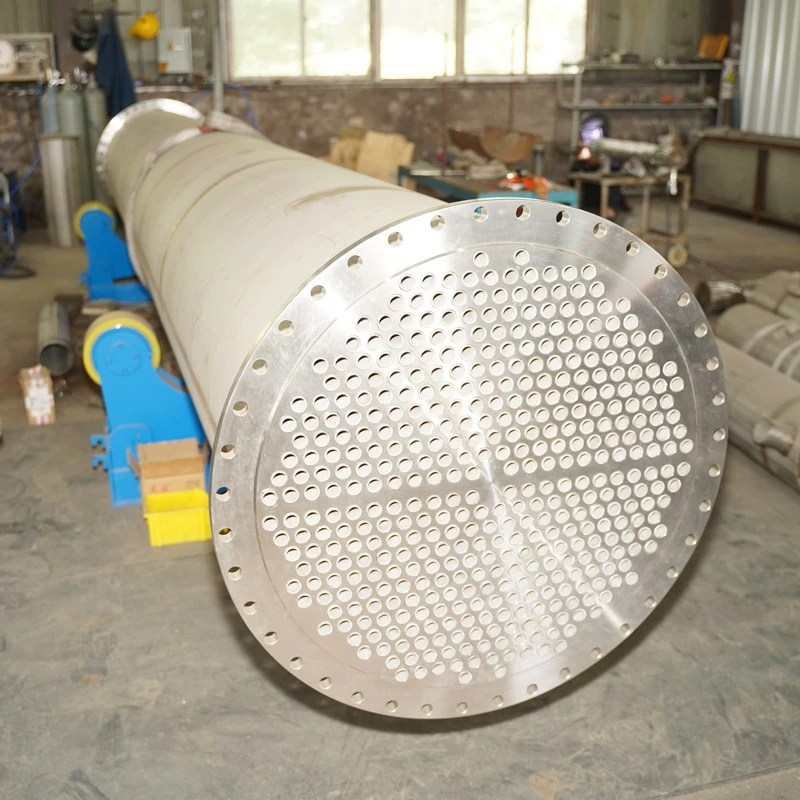
However, mild steel is prone to corrosion, especially in the presence of moisture and certain chemicals. To prevent corrosion, mild steel tubular heat exchangers can be coated with a protective layer, such as paint or a corrosion - resistant alloy.
Tubular Type Heat Exchanger
The term “tubular type heat exchanger” is a broad category that encompasses all heat exchangers that use tubes as the primary heat transfer surface. Each type of tubular heat exchanger has its own unique characteristics and applications, but they all share the common feature of using tubes to transfer heat between two fluids.
When selecting a tubular heat exchanger, several factors need to be considered, including the type of fluids, the operating temperature and pressure, the heat transfer requirements, the available space, and the budget. As a tubular heat exchanger supplier, I can provide professional advice and customized solutions to meet the specific needs of my customers.
If you are in the market for a tubular heat exchanger, I encourage you to contact me for more information. Whether you need a shell and tube heat exchanger for a large - scale industrial process, a double - pipe heat exchanger for a small - scale application, or a compact tubular heat exchanger for a space - constrained environment, I can offer high - quality products and excellent customer service. Let's discuss your requirements and find the best tubular heat exchanger solution for your business.
References
- Incropera, F. P., DeWitt, D. P., Bergman, T. L., & Lavine, A. S. (2019). Fundamentals of Heat and Mass Transfer. John Wiley & Sons.
- Shah, R. K., & Sekulic, D. P. (2003). Fundamentals of Heat Exchanger Design. John Wiley & Sons.
- Green, D. W., & Perry, R. H. (2007). Perry's Chemical Engineers' Handbook. McGraw - Hill.