

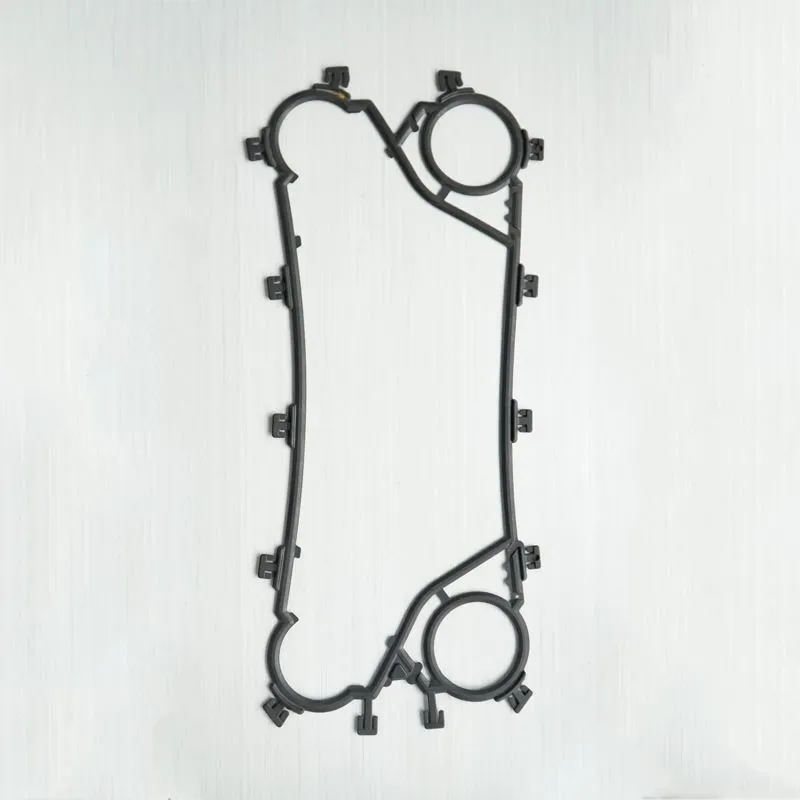
As a supplier of plate heat exchanger gaskets, I understand the critical role these gaskets play in the efficient and reliable operation of plate heat exchangers. Ensuring the performance of these gaskets is not only crucial for our customers but also for the reputation of our products. In this blog, I will share some key methods and considerations on how to test the performance of a plate heat exchanger gasket.

1. Material Compatibility Testing
The first step in evaluating a plate heat exchanger gasket is to test its material compatibility. Gaskets are exposed to various fluids, including water, chemicals, and oils, in different temperature and pressure conditions. Incompatible materials can lead to gasket degradation, leakage, and ultimately, failure of the heat exchanger.
- Chemical Resistance Testing: We can immerse small samples of the gasket material in different chemicals that the heat exchanger may encounter. After a specific period, usually ranging from days to weeks, we measure the changes in the gasket's physical properties, such as weight, volume, hardness, and tensile strength. For example, if a gasket is used in a chemical processing plant where it may come into contact with acids or alkalis, we need to ensure that it can withstand the corrosive effects of these substances. A decrease in hardness or an increase in weight may indicate chemical attack on the gasket material.
- Temperature Resistance Testing: Plate heat exchangers often operate at elevated temperatures. Therefore, it is essential to test the gasket's performance at different temperature ranges. We can use a thermal chamber to subject the gasket samples to specific temperatures for a set duration. During this process, we monitor the gasket's ability to maintain its sealing properties. For instance, some rubber gaskets may become brittle at low temperatures or lose their elasticity at high temperatures, which can lead to leakage. By testing the gasket at different temperatures, we can determine its maximum and minimum operating temperature limits.
2. Sealing Performance Testing
The primary function of a plate heat exchanger gasket is to provide a reliable seal between the plates. Any leakage can result in reduced heat transfer efficiency, contamination of fluids, and potential damage to the heat exchanger.
- Pressure Testing: We can use a pressure testing rig to simulate the operating pressure conditions of the heat exchanger. The gasket is installed between two test plates, and a controlled pressure is applied to the system. We then monitor for any signs of leakage, such as fluid seepage or a drop in pressure. This test helps us determine the maximum pressure that the gasket can withstand without leaking. For example, in a high - pressure steam heat exchanger, the gasket needs to be able to seal effectively under significant pressure differentials.
- Leak Detection: In addition to pressure testing, we can use more sensitive leak detection methods, such as helium mass spectrometry. This method is particularly useful for detecting very small leaks that may not be visible to the naked eye. Helium is a small molecule that can easily penetrate through small gaps. By introducing helium into one side of the gasketed joint and using a mass spectrometer to detect helium on the other side, we can accurately measure the leakage rate. This is especially important in applications where even a small amount of leakage can have serious consequences, such as in the pharmaceutical or food industries.
3. Physical Property Testing
The physical properties of a gasket, such as hardness, tensile strength, and compression set, can significantly affect its performance.

- Hardness Testing: Hardness is an important property that determines the gasket's ability to conform to the surface of the plates and provide a good seal. We can use a durometer to measure the hardness of the gasket material. Different applications may require gaskets with different hardness levels. For example, a softer gasket may be more suitable for sealing irregular surfaces, while a harder gasket may be better for high - pressure applications.
- Tensile Strength Testing: Tensile strength measures the maximum amount of tensile stress that a gasket can withstand before breaking. We can use a tensile testing machine to apply a gradually increasing tensile force to a gasket sample until it fails. This test helps us ensure that the gasket has sufficient strength to withstand the forces exerted on it during installation and operation.
- Compression Set Testing: Compression set is the permanent deformation of a gasket after it has been compressed for a certain period. A high compression set can lead to a loss of sealing ability over time. We can use a compression set test fixture to compress the gasket sample to a specific percentage of its original thickness and hold it at a certain temperature for a set time. After the test, we measure the amount of permanent deformation. A lower compression set indicates better long - term sealing performance.
4. Aging and Durability Testing
Plate heat exchanger gaskets are expected to have a long service life. Therefore, it is important to test their aging and durability characteristics.
- Accelerated Aging Testing: To simulate long - term exposure to environmental factors, we can use accelerated aging techniques. For example, we can expose the gasket samples to high temperatures, high humidity, or ultraviolet radiation for a shorter period to accelerate the aging process. After the aging treatment, we perform the same physical and sealing performance tests as before to evaluate the changes in the gasket's properties. This helps us predict the gasket's performance over its expected service life.
- Cyclic Testing: In real - world applications, gaskets are often subjected to cyclic loading, such as repeated temperature and pressure changes. We can use a cyclic testing machine to simulate these conditions. The gasket is installed in a test rig, and it is subjected to a series of temperature and pressure cycles. We monitor the gasket's performance during and after the cyclic testing to ensure that it can withstand the cyclic loading without failure.
5. Performance in Real - World Applications
While laboratory testing provides valuable information, it is also important to evaluate the gasket's performance in real - world applications. We can install the gaskets in actual plate heat exchangers and monitor their performance over time. This allows us to observe how the gaskets perform under real operating conditions, including factors such as vibration, fluid flow, and thermal cycling.
- Field Monitoring: We can use sensors and monitoring equipment to collect data on the gasket's performance in the field. For example, we can measure the temperature, pressure, and leakage rate of the heat exchanger over a period of time. By analyzing this data, we can identify any potential issues with the gasket and make necessary adjustments or replacements.
- Customer Feedback: Customer feedback is also an important source of information. We encourage our customers to provide feedback on the performance of our gaskets. This feedback can help us identify any areas for improvement and make changes to our products or testing methods accordingly.
In conclusion, testing the performance of a plate heat exchanger gasket is a comprehensive process that involves multiple aspects, including material compatibility, sealing performance, physical properties, aging and durability, and real - world performance. By conducting these tests, we can ensure that our gaskets meet the high - quality standards required by our customers.
If you are in the market for high - quality plate heat exchanger gaskets, we invite you to explore our product range. We offer a variety of gaskets, including Plate Heat Exchanger Sealing Gasket, PHE Rubber Gasket, and Heat Exchanger Gasket. Our gaskets are rigorously tested to ensure optimal performance and reliability. Contact us today to discuss your specific requirements and start a procurement negotiation.
References
- ASME Boiler and Pressure Vessel Code, Section VIII, Division 1.
- ASTM International standards related to gasket testing, such as ASTM F36 for gasket compression and recovery and ASTM D412 for rubber tensile properties.
- Manufacturer's guidelines and technical literature on plate heat exchanger gaskets.