

As a supplier of heat exchanger rubber gaskets, I've witnessed firsthand the crucial role these components play in the overall performance of heat exchangers. One aspect that often goes under - the - radar but is of significant importance is the impact of heat exchanger rubber gaskets on the vibration isolation of the heat exchanger. In this blog, I'll delve into this topic, exploring how these gaskets contribute to vibration isolation, the benefits they bring, and why choosing the right gasket matters.
Understanding Vibration in Heat Exchangers
Before we discuss the role of rubber gaskets, it's essential to understand why vibration occurs in heat exchangers. Heat exchangers are complex systems where fluids flow through tubes or plates, and this fluid movement can generate dynamic forces. Additionally, the operation of pumps and fans associated with the heat exchanger can introduce mechanical vibrations. These vibrations can have several negative consequences. They can cause structural fatigue in the heat exchanger, leading to cracks and leaks over time. Vibration can also generate noise, which is not only a nuisance but can also be an indicator of inefficiency in the system. Moreover, excessive vibration can disrupt the flow of fluids within the heat exchanger, reducing its heat transfer efficiency.
How Heat Exchanger Rubber Gaskets Provide Vibration Isolation
Heat exchanger rubber gaskets act as a buffer between different components of the heat exchanger. Their elastic nature allows them to absorb and dampen vibrations. When a vibration is generated, the rubber gasket deforms slightly, converting the kinetic energy of the vibration into heat energy through internal friction. This energy dissipation reduces the amplitude of the vibration and prevents it from being transmitted throughout the heat exchanger.
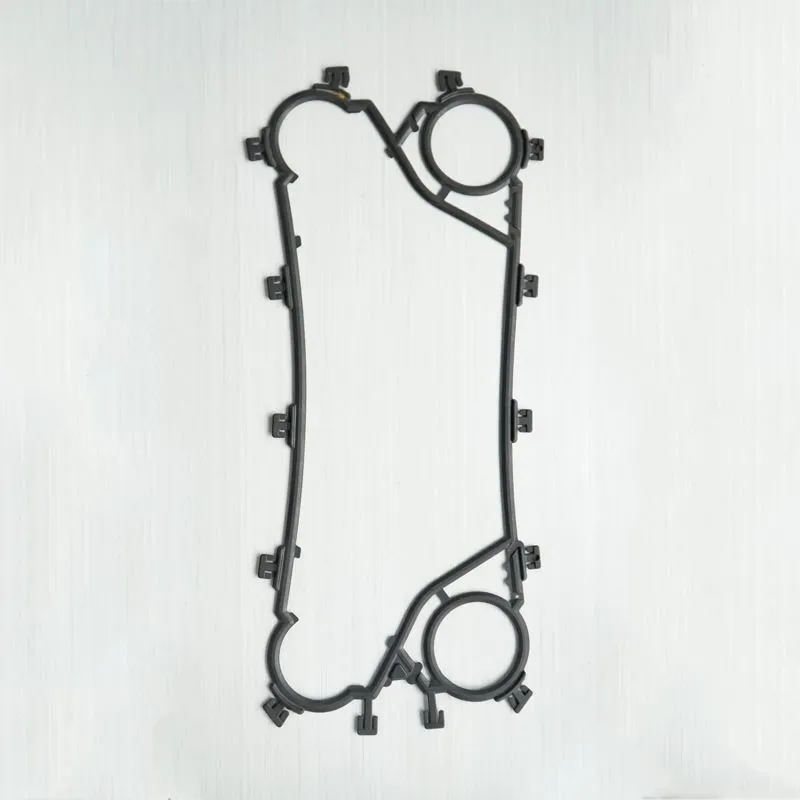
The design of the gasket also plays a role in vibration isolation. A well - designed gasket fits snugly between the mating surfaces of the heat exchanger components. This tight fit helps to maintain a stable connection, reducing the likelihood of movement that could contribute to vibration. For example, in Plate Heat Exchanger Sealing Gasket, the gasket's shape and size are precisely engineered to ensure proper sealing and vibration isolation.
Benefits of Vibration Isolation with Rubber Gaskets
Extended Equipment Lifespan
By reducing the impact of vibrations, rubber gaskets help to extend the lifespan of the heat exchanger. As mentioned earlier, vibrations can cause structural fatigue. When the vibrations are dampened, the stress on the heat exchanger's components is reduced, minimizing the risk of cracks and other forms of damage. This means that the heat exchanger can operate for a longer period without the need for costly repairs or replacements.
Improved Energy Efficiency
Vibration can disrupt the smooth flow of fluids within the heat exchanger. When the flow is disrupted, the heat transfer process becomes less efficient. Rubber gaskets help to maintain a stable environment for fluid flow by isolating vibrations. This allows the heat exchanger to operate at its optimal efficiency, reducing energy consumption and lowering operating costs.
Noise Reduction
Noise is often a by - product of vibration. By isolating vibrations, rubber gaskets can significantly reduce the noise generated by the heat exchanger. This is particularly important in settings where noise levels need to be kept low, such as in hospitals, laboratories, or residential areas. A quieter heat exchanger also indicates a more stable and efficient operation.
Factors Affecting the Vibration Isolation Performance of Rubber Gaskets
Material Selection
The choice of rubber material is crucial for effective vibration isolation. Different rubber compounds have different properties, such as hardness, elasticity, and damping characteristics. For example, natural rubber has high elasticity and good damping properties, making it suitable for many heat exchanger applications. However, in high - temperature or chemical - exposed environments, synthetic rubbers like EPDM or Viton may be more appropriate. These synthetic rubbers can withstand harsh conditions while still providing adequate vibration isolation. You can find a wide range of Heat Exchanger Rubber Gasket materials in our product catalog.
Gasket Thickness
The thickness of the rubber gasket also affects its vibration isolation performance. A thicker gasket generally has more material to absorb and dampen vibrations. However, it's important to find the right balance. If the gasket is too thick, it may cause issues with the assembly of the heat exchanger or affect the sealing performance. On the other hand, a gasket that is too thin may not provide sufficient vibration isolation.
Installation Quality
Proper installation is essential for the rubber gasket to perform its vibration isolation function effectively. If the gasket is not installed correctly, it may not fit properly between the components, reducing its ability to absorb vibrations. Additionally, incorrect installation can lead to uneven stress distribution, which can cause premature failure of the gasket.
Choosing the Right Heat Exchanger Rubber Gasket for Vibration Isolation
When selecting a heat exchanger rubber gasket for vibration isolation, several factors need to be considered. First, understand the operating conditions of the heat exchanger, including temperature, pressure, and the type of fluids being used. This will help you choose the appropriate rubber material. Second, consider the design and size of the heat exchanger. A gasket that is specifically designed for your heat exchanger model will provide the best fit and vibration isolation performance. You can explore our wide range of Heat Exchanger Gasket options to find the one that suits your needs.

Conclusion
Heat exchanger rubber gaskets play a vital role in the vibration isolation of heat exchangers. They provide numerous benefits, including extended equipment lifespan, improved energy efficiency, and noise reduction. As a supplier, I understand the importance of providing high - quality rubber gaskets that are designed to meet the specific needs of each heat exchanger application. If you're looking for a reliable solution for your heat exchanger's vibration isolation needs, I encourage you to reach out to us. We can help you select the right gasket and provide expert advice on installation and maintenance.
References
- Incropera, F. P., & DeWitt, D. P. (2002). Fundamentals of Heat and Mass Transfer. Wiley.
- Schlünder, E. U. (Ed.). (1983). Heat Exchangers: Design and Theory Sourcebook. Hemisphere Publishing Corporation.
- Stoecker, W. F. (1989). Refrigeration and Air Conditioning. McGraw - Hill.