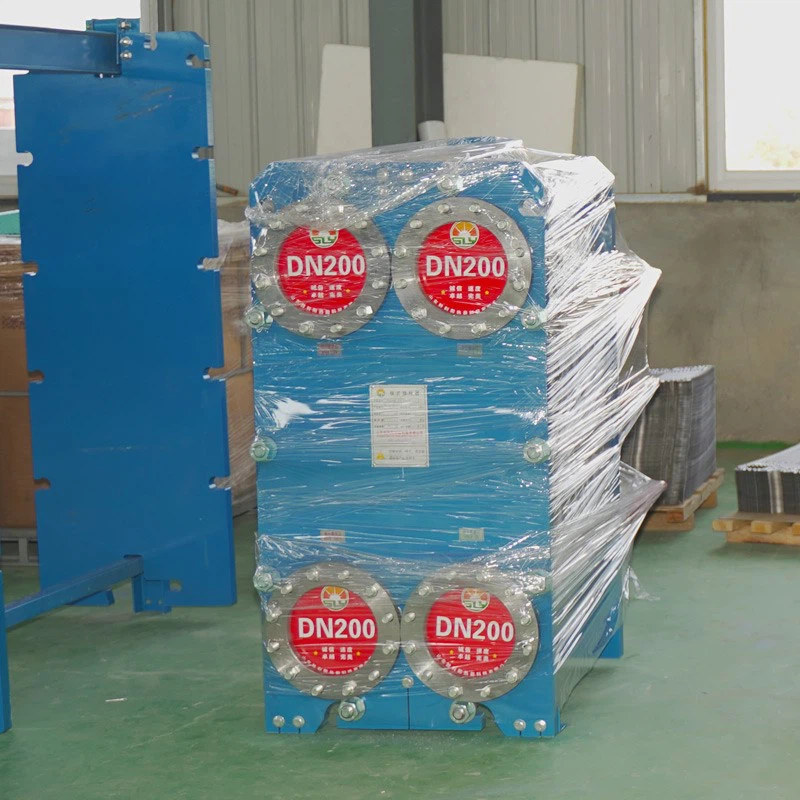
To achieve satisfactory usage experience and stable running performance of semi welded plate heat exchangers, users need to pay attention to various details including installation placement, startup and shutdown operations, daily maintenance, operating condition monitoring and usage scenario adaptation. Generally speaking, users only need to follow the principles of gentle operation and careful maintenance for easy daily management.
Firstly, attach importance to equipment placement and surrounding environment, which is the foundation for smooth operation. Place the equipment on flat and solid ground to ensure stable placement and avoid tilting, so as to reduce unnecessary vibration during operation. Do not stack sundries or barriers around the unit, and leave ample space on all sides to ensure smooth air circulation and facilitate daily close inspection. Avoid placing it in overly humid, dusty or oil-fume-filled areas. Long-term exposure to such harsh environments will lead to dirt accumulation on the equipment surface, impair its overall working state and shorten its service life. In addition, keep it away from high-temperature heat sources and direct cold wind, so that the equipment can operate stably in a moderate-temperature environment.
Secondly, follow correct startup, shutdown and daily operating rules and avoid improper hasty operations. Never run the equipment at maximum power right after startup. Adjust the operating output gradually to let the equipment reach stable working conditions slowly and allow internal components to adapt to the operating state fully. Likewise, shut down the equipment slowly rather than cutting off the power supply forcibly, so as to reduce mechanical wear caused by sudden shutdown. Maintain a fixed regular operating schedule and avoid frequent startup and shutdown operations, since frequent status switching will disturb its operating rhythm and affect operational stability. Unify simple operating specifications in scenarios with multiple operators to prevent random adjustment of operating gears and maintain consistent stable operation.
Furthermore, carry out regular cleaning and basic maintenance to keep the equipment in good working condition. Wipe away accumulated dust and surface stains regularly to keep the equipment clean and tidy. Adopt soft cleaning tools during cleaning work instead of rough hard tools, so as to prevent scratches on the equipment surface. Only conventional external cleaning is required for daily use, and disassembly for deep cleaning is unnecessary. When the equipment is to be left unused for a long period, clean up surface dust beforehand and store it in a dry and well-ventilated place to avoid dust accumulation, ensuring it can be put into use smoothly again later.
In addition, monitor real-time operating conditions and keep an eye on practical usage details. Semi welded plate heat exchangers operate stably with low noise under normal working conditions. Once obvious abnormal noise, intense vibration or other unusual working phenomena are found, stop the equipment operation immediately, eliminate external interfering factors and then restart it. Do not touch any running parts casually and keep a safe distance, which can ensure personal safety as well as uninterrupted normal operation of the equipment. Modify the operating mode according to seasonal temperature changes: strengthen peripheral ventilation in hot seasons and adopt steady low-speed startup in cold seasons, enabling the equipment to adapt well to different ambient temperatures.
Finally, form scientific long-term usage habits to prolong the service life effectively. Stick to standardized regular operation and avoid continuous overloaded operation for long hours. Arrange reasonable daily working hours to relieve operating load properly. Compared with other similar heat exchange equipment, this type of heat exchanger is more applicable to mild and stable operating modes. Operating it in accordance with its inherent performance characteristics can give full play to its functional advantages. Form a habit of conducting simple regular inspections to discover minor abnormal conditions and make timely adjustments. By adhering to standardized usage habits, the equipment can maintain efficient working performance all the time, prolong its overall service cycle greatly, and maintain reliable long-term operation in various practical application scenarios.